Top 16 Animals That Look Like Otters (With Images)
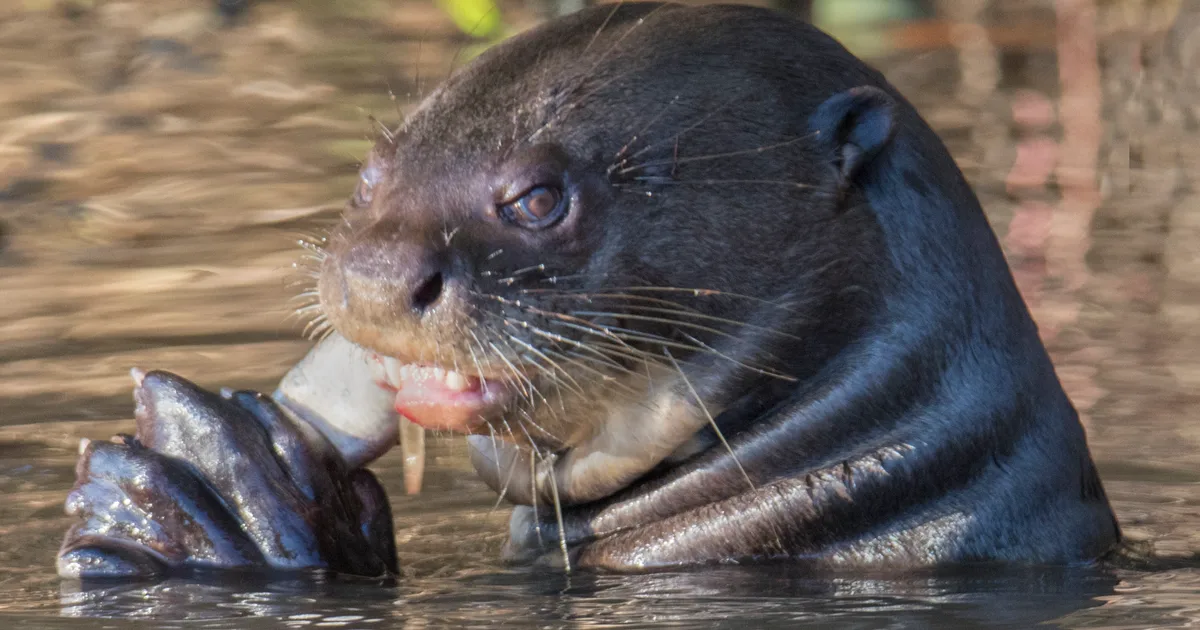
Otters are well-known for their sleek bodies, expressive faces, and aquatic acrobatics. Because they share close evolutionary ties with many other members of the Mustelidae family, several wild mammals display striking similarities in shape, fur texture, and behavior.
Whether you have spotted an animal scurrying along a riverbank or seen a woodland creature darting through trees, distinguishing these creatures from otters often comes down to minor details like tail shape, face markings, and foot structure. Exploring these lookalikes helps clarify how diverse and adaptable this group of animals truly is across different habitats.
In this comprehensive guide, we examine the physical features, behavioral traits, and distinct habitats of the top species frequently mistaken for otters.
List of Animals That Look Like Otters
You will also learn about other fascinating wildlife variations, such as animals without tails or animals that have spots, to help expand your animal identification skills. Here is the list of the 16 animals that look like otters featured in the article:
- Martens
- Weasels
- Ferrets
- Mongooses
- Badgers
- European Polecat
- Nutria
- Mink
- Stoat
- Wolverines
- Civet
- Tayras
- Fishers
- Grisons
- Jaguarundi
- Binturong
Martens
- Scientific Name:Martes
- Class: Mammalia
- Diet: Carnivorous / Omnivorous
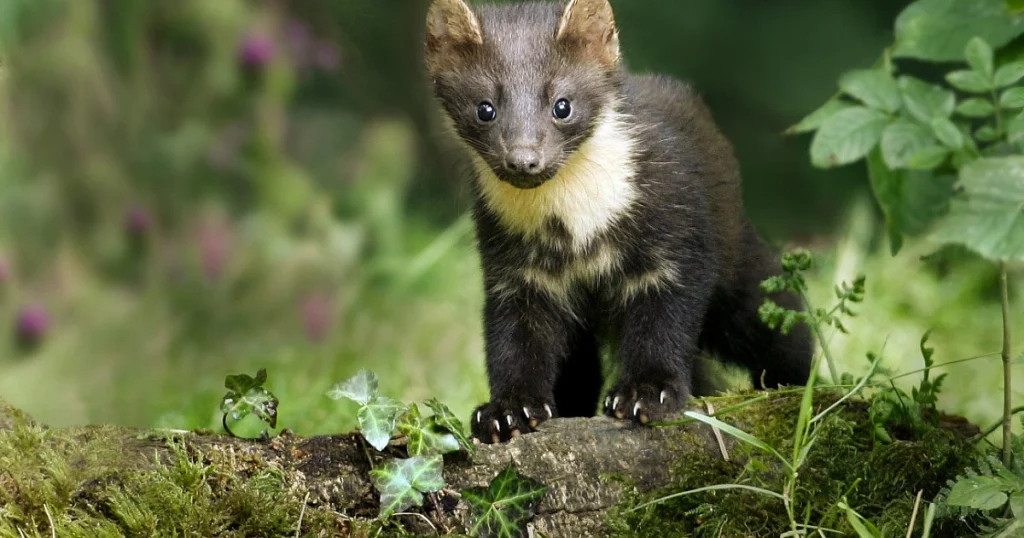
When searching for animals that look like otters, martens are often among the first species wildlife enthusiasts spot. Martens are slender, tree-dwelling carnivores belonging to the mustelid family, making them close genetic relatives of otters. They feature elongated bodies, bushy tails, and soft fur coats that range in color from light golden brown to deep mahogany.
Unlike semi-aquatic otters, martens spend the vast majority of their time navigating forest canopies and climbing trees with extreme agility. Their sharp retractile claws allow them to chase down prey high above the ground rather than hunting in freshwater streams or coastal ocean waters.
Despite their arboreal lifestyle, a marten moving across the ground can easily be mistaken for a small otter due to its low-slung, flexible posture. They inhabit dense northern forests across North America, Europe, and Asia, preying mainly on small rodents, birds, and fruits.
Weasels
- Scientific Name:Mustela
- Class: Mammalia
- Diet: Carnivorous
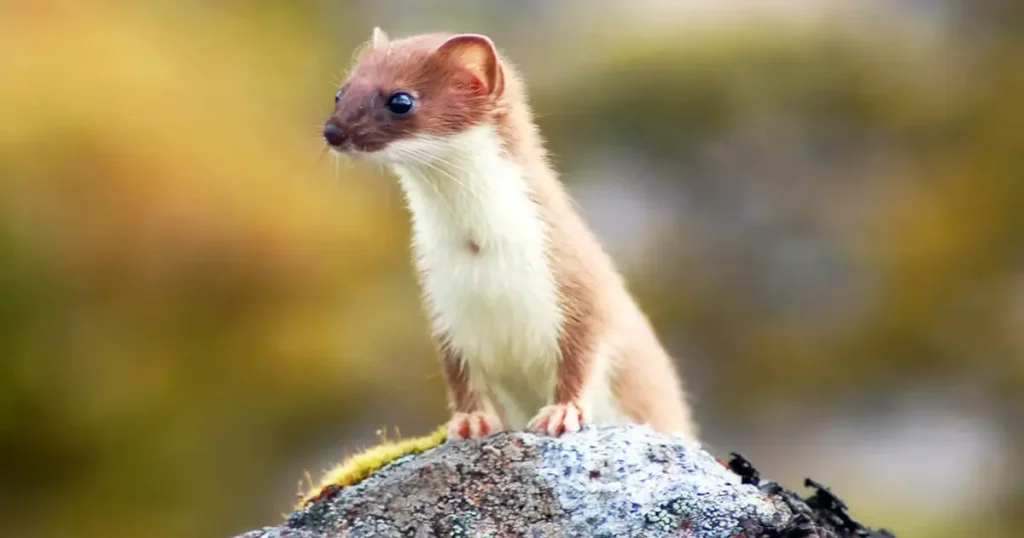
Weasels are prominent animals that look like otters, representing the classic long-bodied silhouette typical of small carnivores. They share the sleek, tubular frame that otters possess on a larger scale, accompanied by short legs, small rounded ears, and brown coats often paired with a distinctly lighter underside.
While otters are adapted for swimming with webbed feet and water-repellent fur, weasels are specialized terrestrial hunters built to maneuver through tight underground burrows. Their hyperactive metabolism keeps them constantly on the hunt for mice, voles, and other small prey.
When observed from a distance in tall grass or brush, a weasel’s undulating running motion closely mimics that of an otter moving on land. For more on compact furry creatures, check out our guide on animals that look like squirrels.
Ferrets
- Scientific Name: Mustela putorius furo
- Class: Mammalia
- Diet: Carnivorous
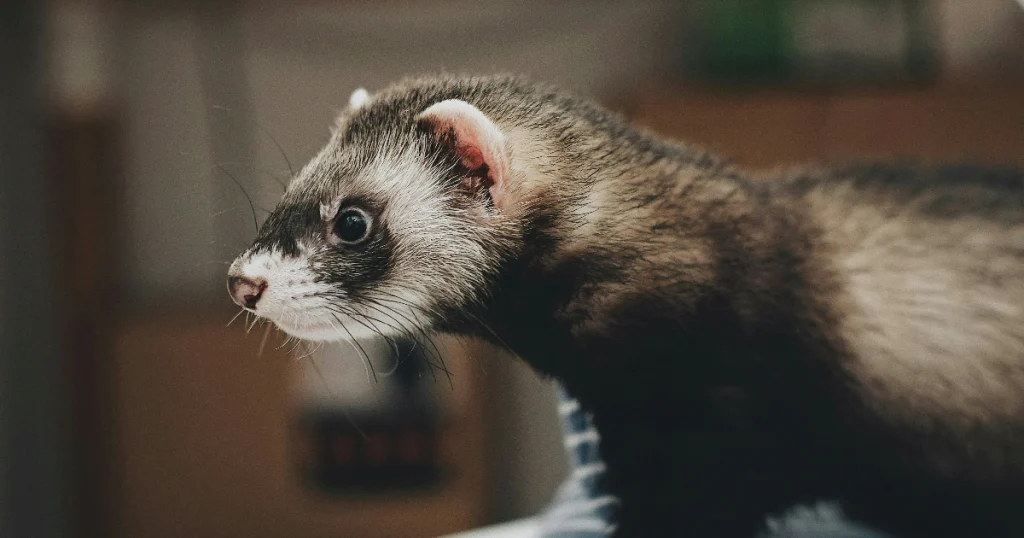
Among domestic pets, ferrets are the most common animals that look like otters. As domesticated versions of the European polecat, they share the elongated trunk, short limbs, and inquisitive facial features characteristic of wild otters. Their curious nature and flexible spines allow them to bend and squeeze through narrow openings effortlessly.
In terms of appearance, ferrets often display mask-like facial coloration and dark limbs, which can easily trick an observer into seeing a small otter. However, ferrets lack the webbed feet and thick aquatic tails that otters rely on for propulsion in water.
While otters thrive in wild aquatic environments, domesticated ferrets rely entirely on human care and thrive as playful, social domestic pets. Their playful wriggling and bounding movements frequently remind animal enthusiasts of river otter behavior on land.
Mongooses
- Scientific Name:Herpestidae
- Class: Mammalia
- Diet: Omnivorous / Carnivorous
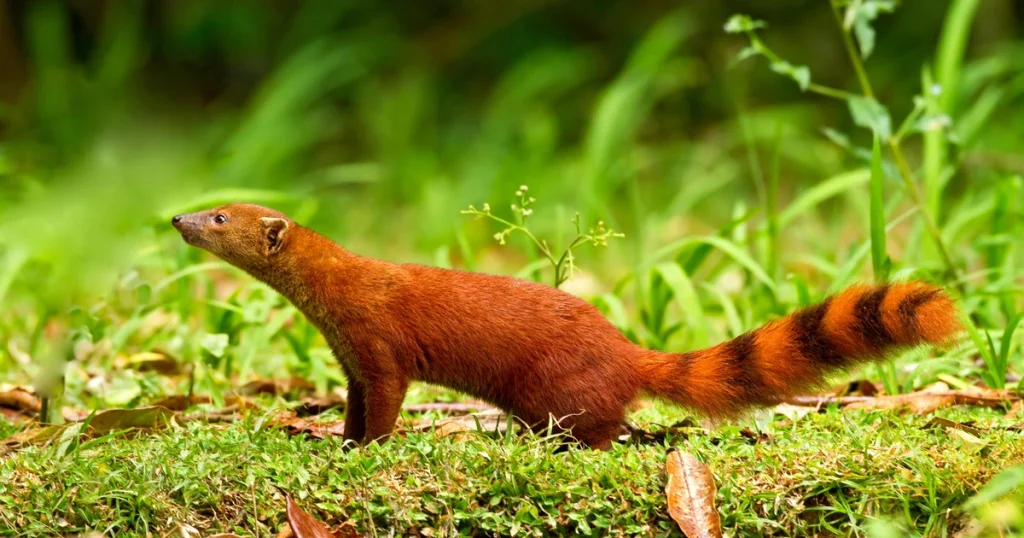
Mongooses serve as notable examples of animals that look like otters despite belonging to an entirely different family (Herpestidae). These slender, fast-moving mammals native to Africa, Southern Europe, and Asia possess sleek fur and low-profile body structures through convergent evolution.
They feature tapered snouts, small ears, and long tails that taper toward the end, similar to the hydrodynamic shape of river otters. Mongooses are predominantly land dwellers that inhabit dry savannas, forests, and scrublands rather than aquatic ecosystems.
Their sharp reflexes and agility are famous for enabling them to hunt venomous snakes, insects, and small rodents. When standing on their hind legs to survey their surroundings, mongooses display an inquisitive posture nearly identical to that of otters.
Badgers
- Scientific Name: Meles meles
- Class: Mammalia
- Diet: Omnivorous
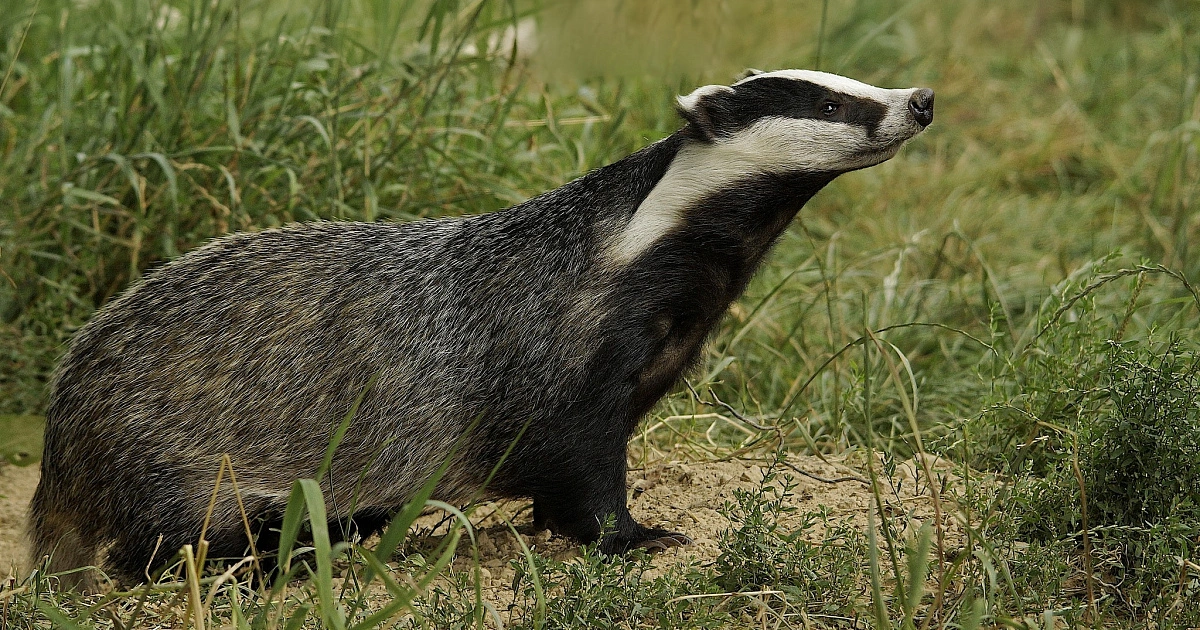
If you are compiling a list of animals that look like otters, badgers deserve a spot due to their shared family lineage. Badgers are stocky, powerful mustelids built with broad bodies and short, thick legs that give them a heavy-set appearance compared to otters. They sport dense fur, powerful digging claws, and prominent black-and-white facial stripes running down their snouts.
Although badgers are much wider and more muscular than sleek otters, their shared family roots give them similar short snouts, small ears, and thick neck muscles. Badgers are fossorial animals, meaning they spend most of their lives digging intricate underground burrow systems called setts.
While otters excel in aquatic navigation, badgers rely on brute strength to break through hard soil and hunt burrowing prey. If you are interested in unique mammal physical traits, explore our breakdown of mammals that cant jump.
European Polecat
- Scientific Name:Mustela putorius
- Class: Mammalia
- Diet: Carnivorous
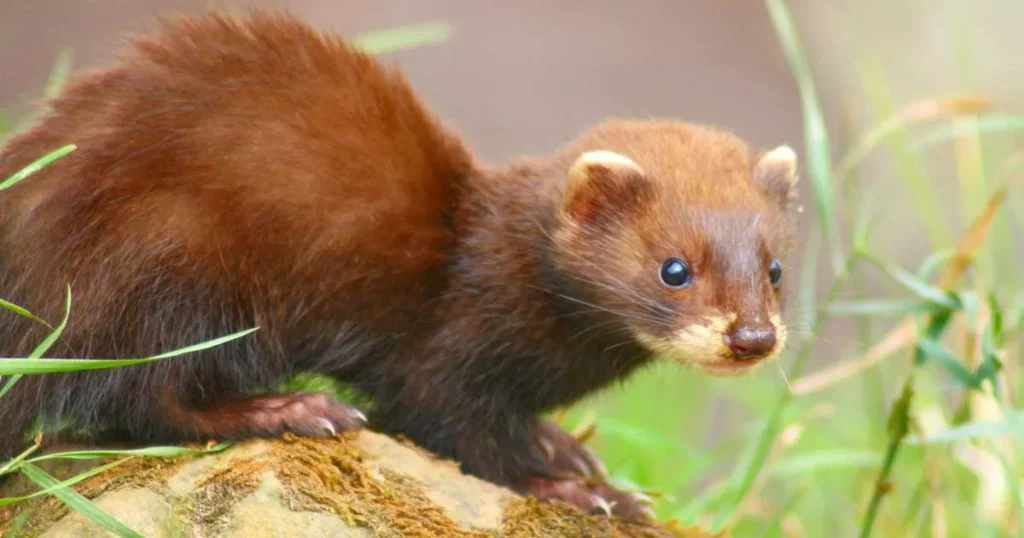
European polecats are wild animals that look like otters, native to western Eurasia and featuring dark brown fur, pale underfur, and a distinct white facial mask. Its dark paws, short ears, and flexible body shape strongly resemble a small river otter at first glance.
Polecats prefer habitats close to water sources, such as riverbanks, marshes, and wetlands, which increases the likelihood of confusing them with otters. They are active nocturnal hunters that search out amphibians, rodents, and birds along damp terrain.
Unlike true aquatic mammals, polecats do not possess webbed toes for sustained swimming, relying instead on stealth and agility along the water’s edge. Their facial markings and dark guard hairs give them a striking resemblance to North American river otters.
Nutria
- Scientific Name:Myocastor coypus
- Class: Mammalia
- Diet: Herbivorous
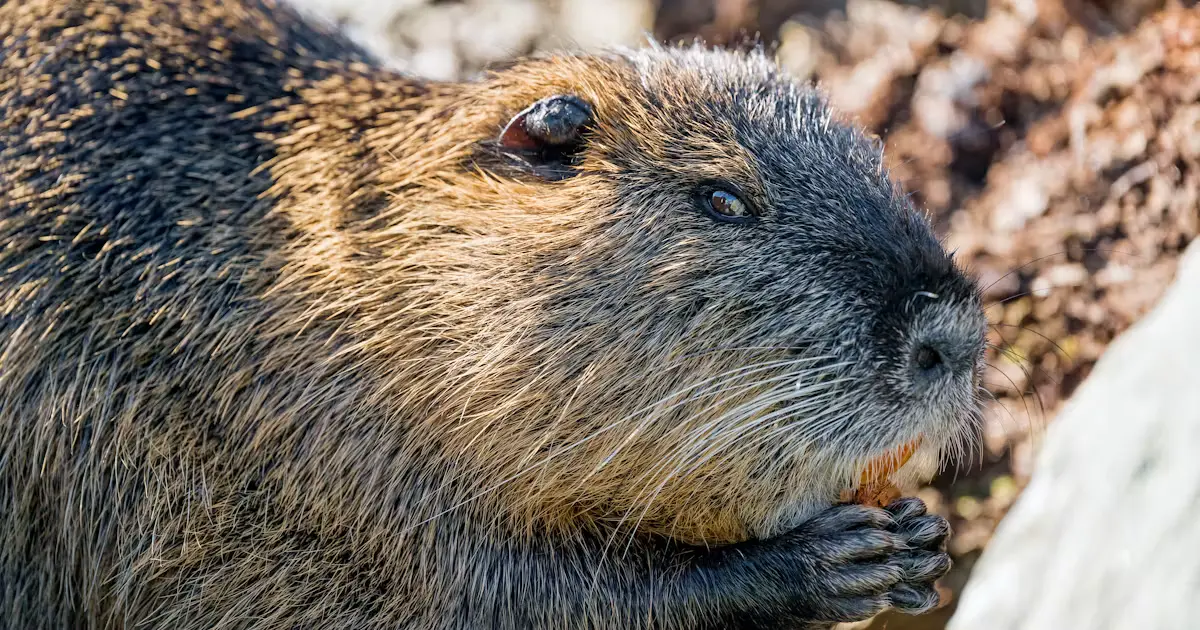
Nutria are frequently cited as the top semi-aquatic animals that look like otters. Also known as coypu, these large rodents native to South America possess dark brown, water-resistant fur and spend much of their lives swimming in ponds, rivers, and marshes.
Because they share the exact same freshwater habitats as otters, nutria are among the most common animals mistaken for river otters. However, nutria possess large orange incisor teeth, round rat-like tails, and webbed hind feet designed for steady swimming.
Unlike carnivorous otters that hunt fish with high energy, nutria are herbivores that feed on aquatic vegetation, roots, and plant stems. Their rounded, heavy-set heads floating at the water’s surface can easily fool an observer from a distance.
Mink
- Scientific Name:Neogale vison
- Class: Mammalia
- Diet: Carnivorous
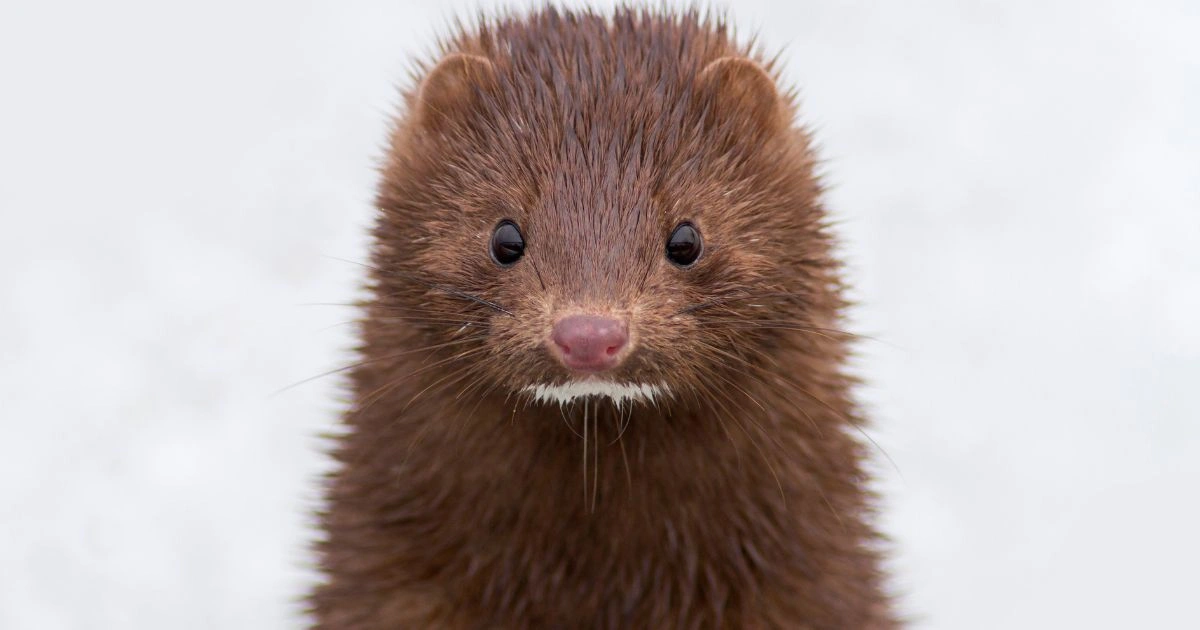
Minks are iconic animals that look like otters, sharing both physical characteristics and semi-aquatic habits. They have dense, silky brown coat layers, slender bodies, and slightly webbed toes that aid in short-distance swimming along riverbanks and coastlines.
They inhabit areas surrounding streams, lakes, and coastal marshes, frequently hunting for fish, frogs, crayfish, and small mammals. Because minks share the same aquatic hunting grounds as river otters, telling them apart requires looking closely at size and tail structure.
Minks are significantly smaller than otters, usually weighing only two to three pounds compared to an otter’s fifteen to thirty pounds. Additionally, minks have pointed faces and bushier tails, whereas otters have flatter, broader skulls and thick, tapered muscular tails.
Stoat
- Scientific Name:Mustela erminea
- Class: Mammalia
- Diet: Carnivorous
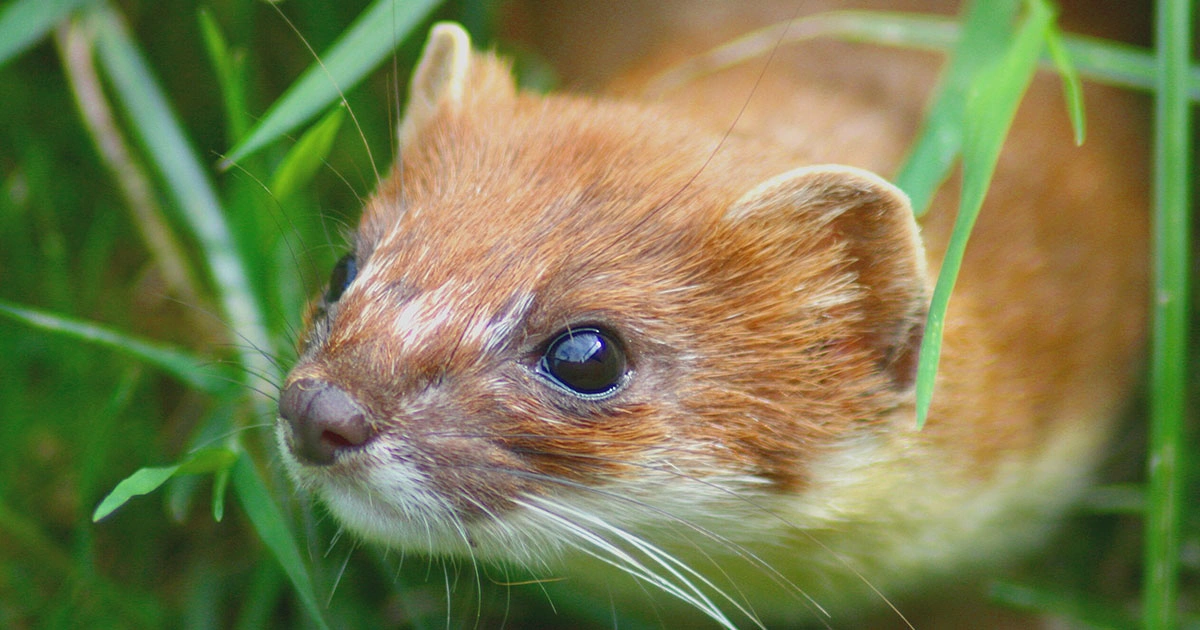
Stoats are compact animals that look like otters, recognized by their slender, tubular bodies and short limbs. During summer, a stoat’s coat is reddish-brown with a white belly, while in winter northern populations turn completely white, keeping a black tail tip.
Stoats share the signature low-slung stance and fluid movement pattern characteristic of all mustelids, making them look like miniature otters on land. They move across terrain with rapid, bounding leaps, using their keen sense of smell and hearing to track down rabbits and rodents.
While they are adept at climbing and can swim short distances when necessary, stoats are primarily terrestrial hunters rather than water-dwelling animals. Their tiny frame usually under a foot long distinguishes them immediately upon closer inspection.
Wolverines
- Scientific Name:Gulo gulo
- Class: Mammalia
- Diet: Omnivorous / Scavenger
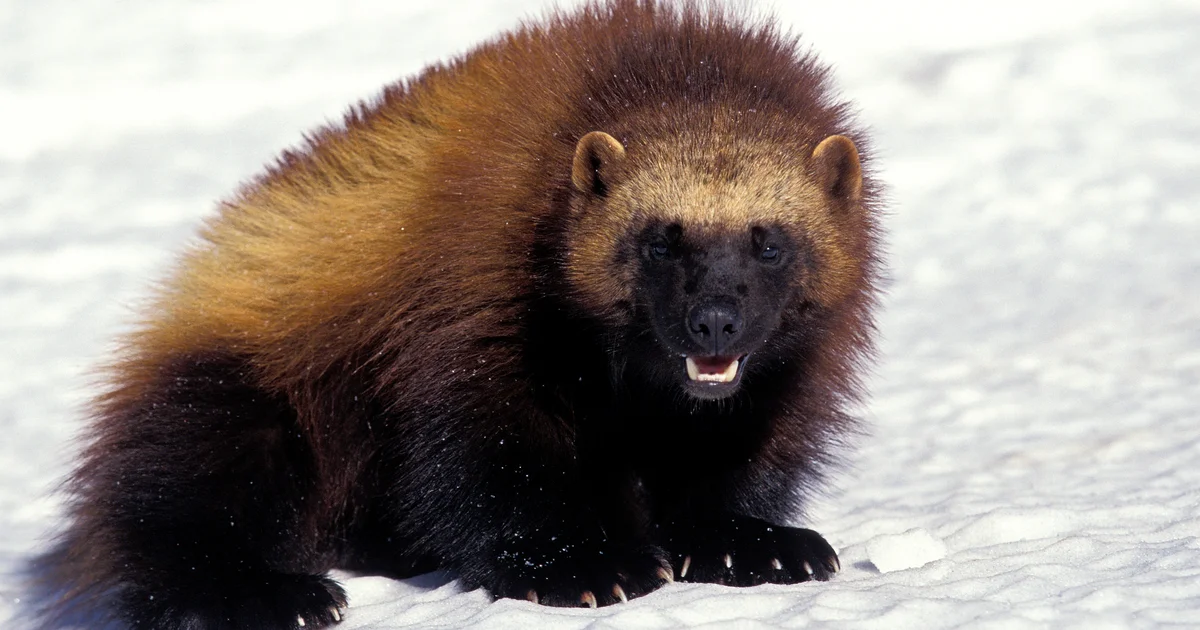
Wolverines represent the largest land-dwelling animals that look like otters, displaying massive, stocky frames with bear-like proportions. They feature dark brown, water-repellent fur, broad heads, small rounded ears, and light-colored stripes along their flanks.
Wolverines are built for harsh boreal forests and subarctic tundra environments, possessing large paws that act like snowshoes on deep drifts. Unlike sleek otters that glide through water, wolverines are powerful land scavengers and hunters capable of taking down large prey.
Their thick fur and rounded facial features highlight their evolutionary connection to otters, despite their vastly different sizes and habitats. A wolverine’s stocky frame, solitary nature, and aggressive disposition set it far apart from playful otter social groups.
Civet
- Scientific Name:Viverridae
- Class: Mammalia
- Diet: Omnivorous
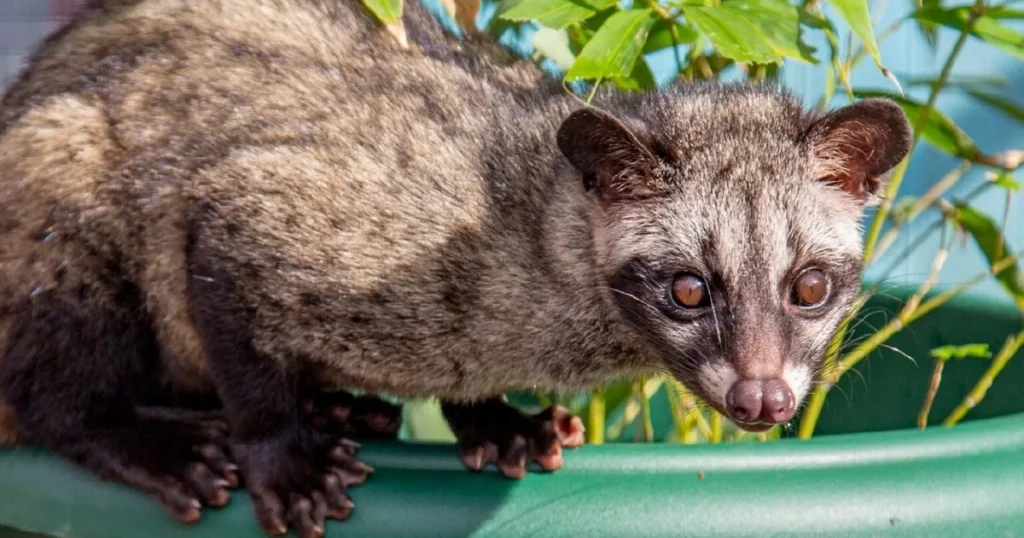
Civets are tropical animals that look like otters, native to forests across Africa and Asia. They display long, low-slung bodies, pointed muzzles, and dark facial markings that give them a sleek, otter-like silhouette when viewed in low light.
Many civet species feature patterned fur with spots or stripes, distinguishing their coats from the solid brown fur typical of river otters. They are primarily nocturnal and spend significant time climbing trees to forage for fruit, insects, and small vertebrates.
Though they are strictly land and tree dwellers, their long tails and flexible spinal movements mimic the fluid motion of swimming otters. Their unique facial structures and markings make them one of the more exotic lookalikes on this list.
Tayras
- Scientific Name:Eira barbara
- Class: Mammalia
- Diet: Omnivorous
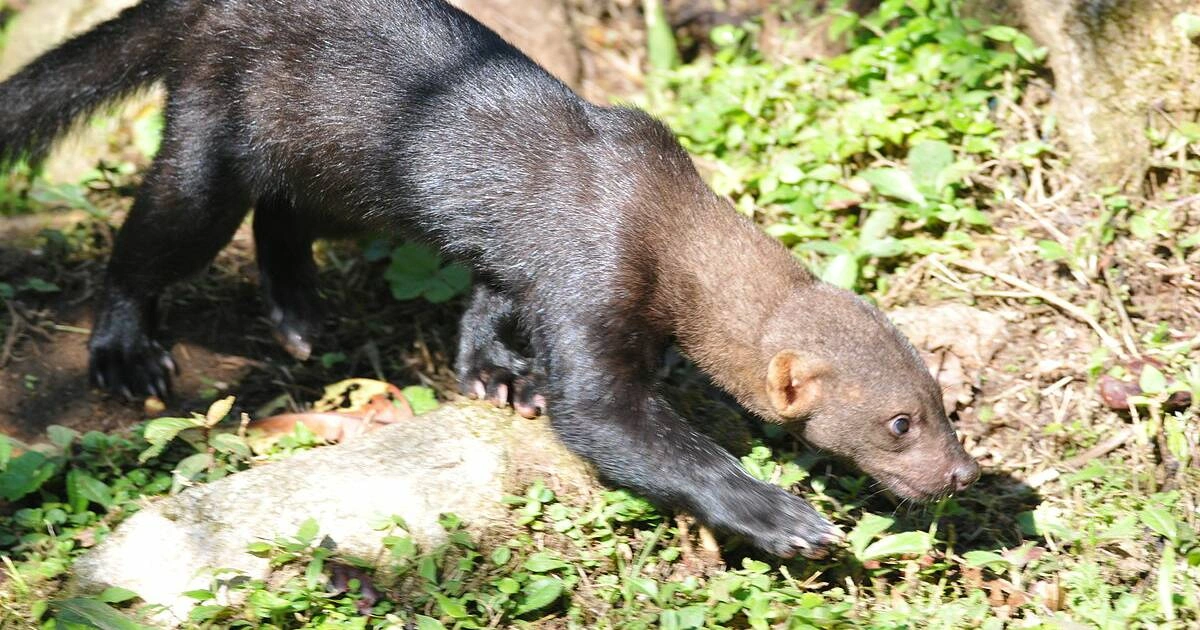
Tayras are rainforest animals that look like otters, native to Central and South America. Featuring a long body, short legs, and a dark brown or black coat, the tayra possesses a distinct lighter-colored patch on its chest and a long, bushy tail.
Tayras share the sleek, muscular frame of otters but are fully adapted for arboreal and terrestrial life in dense tropical forests. They are exceptional climbers, using their strong limbs and sharp claws to travel quickly through high tree canopies.
While an otter moves through water with fluid grace, a tayra displays that same fluidity while running across branches and forest floors. They hunt a varied diet of small mammals, reptiles, birds, fruit, and honey.
Fishers
- Scientific Name:Pekania pennanti
- Class: Mammalia
- Diet: Carnivorous
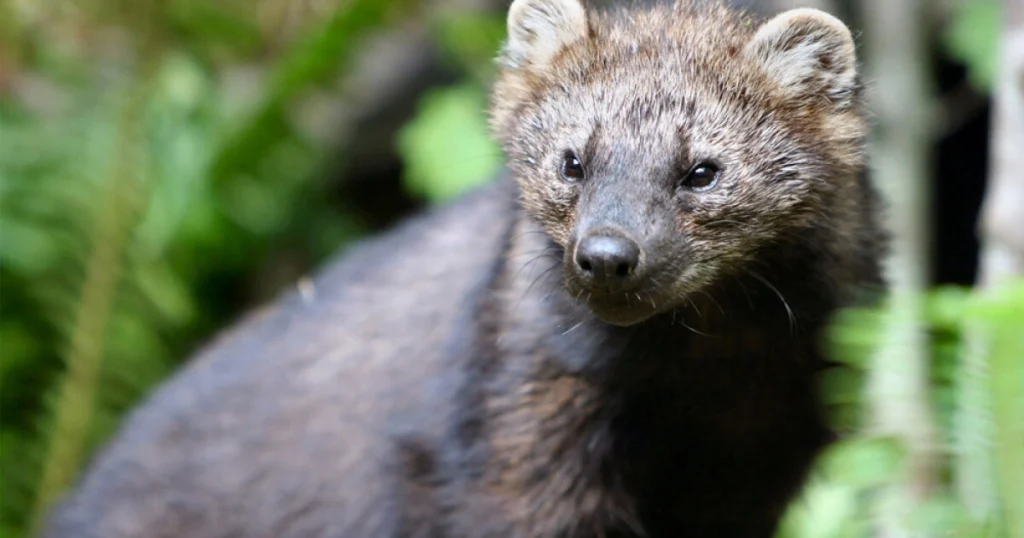
Fishers are medium-sized North American animals that look like otters, sporting dark brown coats, broad heads, and long, bushy tails. Despite their name, fishers rarely eat fish, preferring to hunt porcupines, hares, squirrels, and small mammals in dense coniferous forests.
A fisher’s face, dark eyes, and rounded ears bear a striking similarity to those of river otters, often confusing onlookers in woodland areas. However, fishers lack webbed feet and spend their time climbing trees and tracking prey across forest terrain rather than swimming.
Their low center of gravity and long body structure give them an otter-like bounding stride when traveling across forest floors or snowy ground. They remain one of the few predators capable of successfully hunting porcupines.
Grisons
- Scientific Name:Galictis
- Class: Mammalia
- Diet: Carnivorous
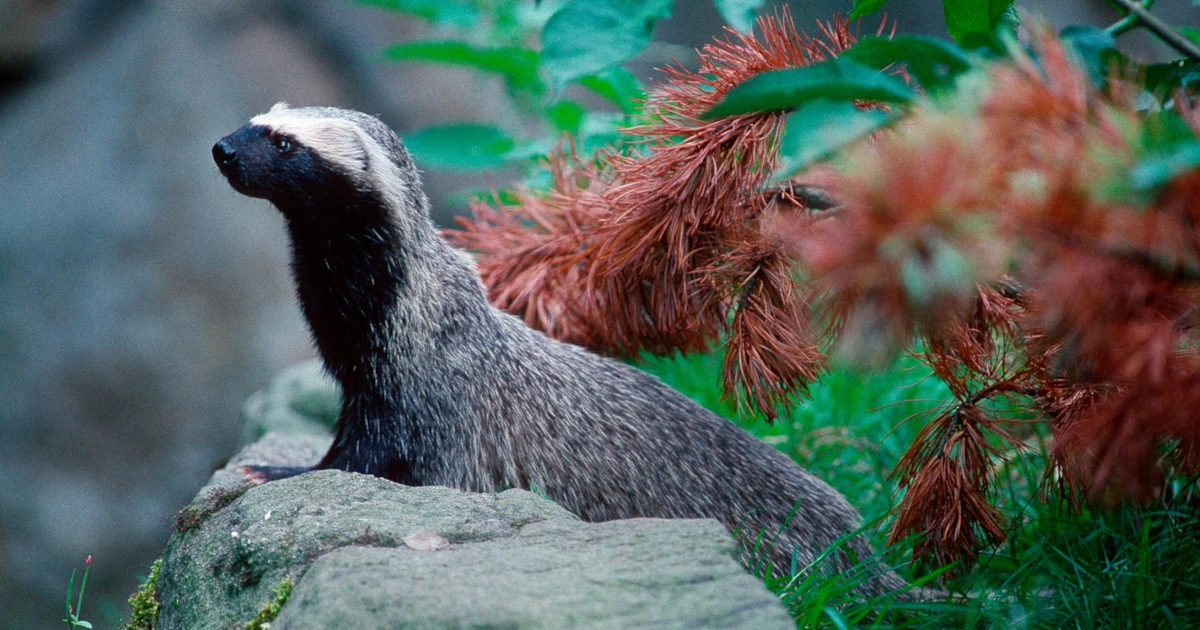
Grisons are Central and South American animals that look like otters, featuring elongated bodies, short legs, and streamlined frames. They have a distinct dark face and underbelly separated from a light gray or frosted back by a white stripe along the neck.
These agile carnivores are expert diggers and runners that thrive near streams, grasslands, and dense forests across South America. Their streamlined frames allow them to dart quickly through thick vegetation, closely mirroring the low, gliding gait of river otters on land.
While grisons are competent swimmers, they spend the vast majority of their time hunting small mammals, birds, and reptiles on dry land. Their unique contrasting fur patterns make them easily distinguishable upon closer inspection.
Jaguarundi
- Scientific Name:Herpailurus yagouaroundi
- Class: Mammalia
- Diet: Carnivorous
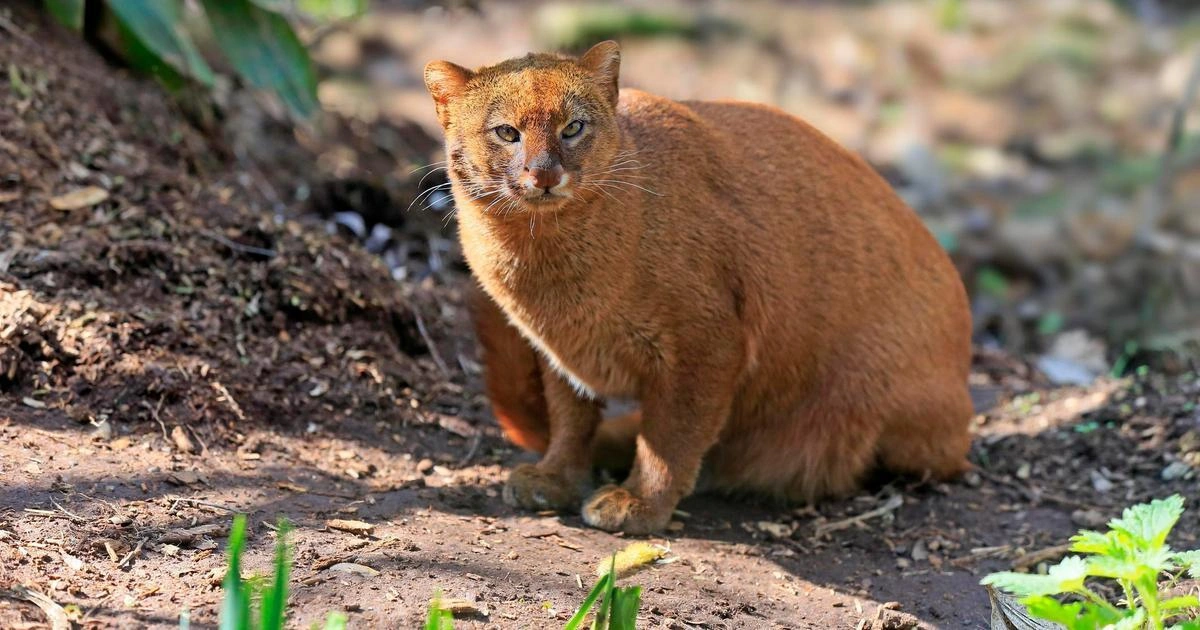
The jaguarundi stands out among animals that look like otters because it is actually a wild cat native to the Americas. It possesses a uniquely non-feline, low-slung body, short legs, a small flattened head, and a long tail, earning it the nickname “otter-cat.”
Unlike most cats, jaguarundis have unspotted coats that range from uniform dark gray to reddish-brown, closely matching the coat tones of river otters. They move with an unusually fluid, low-profile stride through dense brush and forest undergrowth.
Although they are fully felid predators that hunt rodents, birds, and reptiles on land, their sleek physical proportions frequently fool wildlife watchers into thinking they are seeing an otter. They are also active during the daytime, increasing human sightings.
Binturong
- Scientific Name:Arctictis binturong
- Class: Mammalia
- Diet: Omnivorous
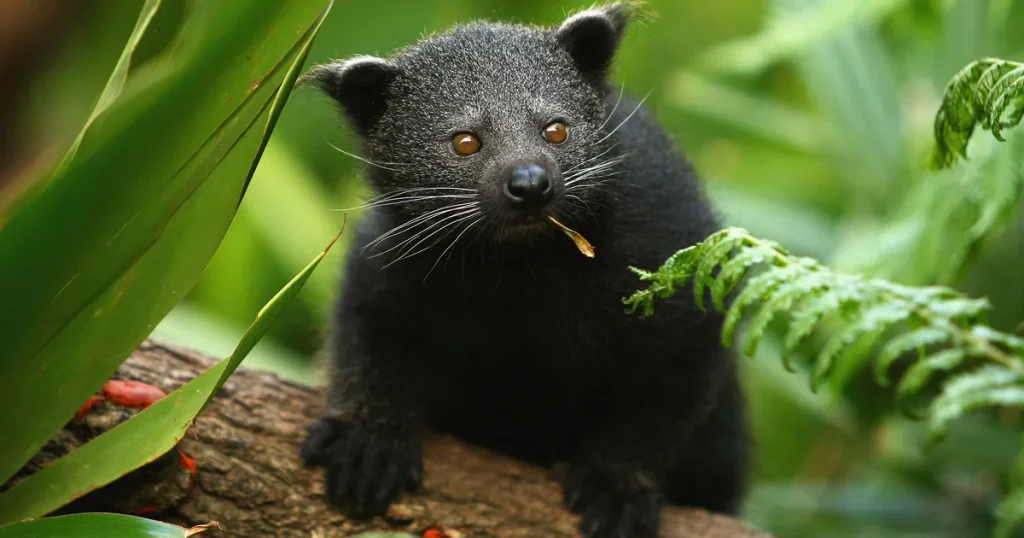
Rounding out our guide to animals that look like otters, the binturong (or bearcat) is a heavy-bodied arboreal mammal native to Asian rainforests. While larger and shaggier than a typical otter, its dark coarse fur, whisker-covered face, and long muscular body give it an otter-like facial profile.
They possess thick prehensile tails and short legs, giving them a slow, low-slung movement style as they navigate high jungle canopies. Binturongs spend almost their entire lives high in the trees, feeding on fruit, leaves, birds, and small rodents.
Though strictly arboreal, their facial structure, small rounded ears, and dark fur color frequently remind observers of giant river otters. Their distinctive scent, often compared to warm buttered popcorn, sets them apart from all other forest species.
Final Thoughts
Understanding the differences between otters and their lookalikes comes down to observing their habitat, physical adaptations, and movement styles. While many members of the mustelid family share long bodies and short legs, otters are uniquely specialized for aquatic life with webbed feet, dense waterproof fur, and broad, muscular tails.
Whether you encounter a semi-aquatic mink along a stream or a marten darting up a tree, recognizing these key distinctions enhances your appreciation for wildlife diversity. Keep an eye out for subtle traits like facial markings, claw structures, and swim patterns to correctly identify these fascinating creatures in the wild.
FAQs
What Animal is Most Commonly Mistaken for an Otter?
The American mink and nutria are the most commonly mistaken animals for otters. Because they share the exact same freshwater habitats and possess dark fur, observers frequently confuse them from a distance.
Are Ferrets and Otters in the Same Animal Family?
Yes, ferrets and otters both belong to the Mustelidae family.While they share similar body shapes and flexible spines, ferrets are domesticated land mammals, whereas otters are wild, semi-aquatic or marine animals.
How Can You Quickly Tell a Mink From a Rver Otter?
Size is the easiest indicator; river otters are much larger, weighing between 15 to 30 pounds, while minks weigh only 2 to 3 pounds. Additionally, otters have thick, muscular tails that taper at the end, while minks have noticeably bushier tails.
Do All Otter Lookalikes Swim in Water?
No, most otter lookalikes like martens, stoats, tayras, and fishers live on land and spend significant time in trees. Only a few lookalikes, such as the mink, nutria, and polecat, spend substantial time near or in water.