Nature displays an extraordinary variety of patterns, and animals that have spots showcase some of the most visually striking adaptations in the wild. From land mammals to ocean creatures, spots serve critical survival purposes like natural camouflage, warning predators, or identifying individual animals.
If you are curious about wildlife patterns, exploring animals that have spots reveals how diverse species adapt to their environments. In this article, we highlight twenty-five incredible animals decorated with distinct spots across their bodies.
List of Animals That Have Spots
- Ladybug
- Spotted Deer
- Dalmatian
- Hyena
- Cheetah
- Whale Shark
- Jaguar
- Spotted Salamander
- Giraffe
- Spotted Turtle
- Ocelot
- Burmese Python
- Fallow Deer
- Spotted Moray
- African Wild Dog
- Appaloosa Horse
- Holstein Friesian Cow
- Spotted Eagle Ray
- Snow Leopard
- Serval
- Leopard Seal
- Spotted Cuscus
- Leopard Gecko
- Spotted Skunk
- Spotted Genet
Ladybug
- Scientific name: Coccinellidae
- Class: Insecta
- Diet: Omnivore / Insectivore
Ladybugs are among the most famous small animals that have spots, featuring bright red or orange shells covered in dark black dots. These distinct markings send a clear signal to prospective predators that the insect tastes bitter and unpleasant.
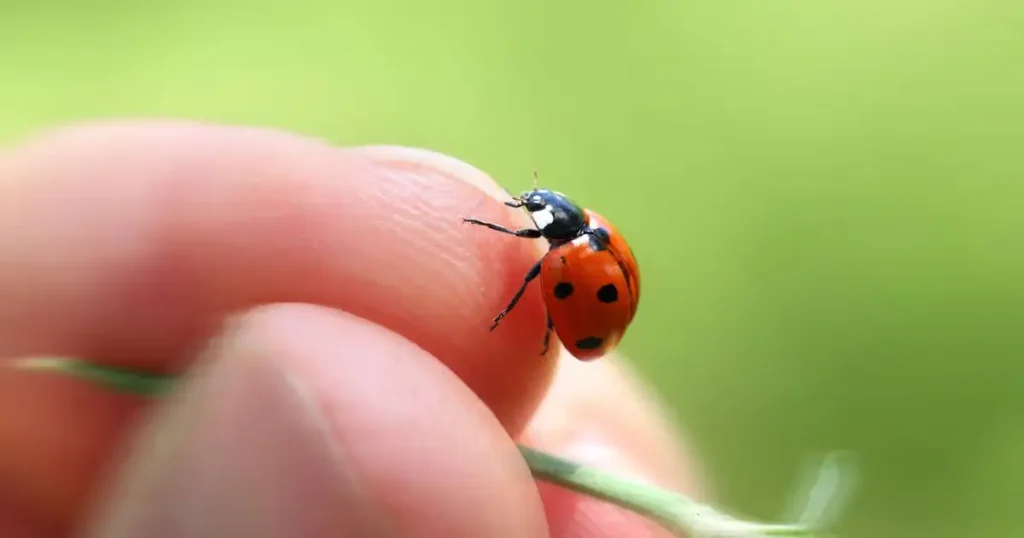
They are highly beneficial to gardeners because they feed on crop-damaging pests like aphids. Their compact, domed bodies and vivid coloration make them easily recognizable around the world.
Beyond their protective coloration, these tiny beetles rely on their spots to blend into flowering plants. As iconic insects with spots, they play a vital role in natural pest control within agricultural ecosystems worldwide.
Spotted Deer
- Scientific name: Axis axis
- Class: Mammalia
- Diet: Herbivore
Also known as the chital, the spotted deer is one of the most elegant animals that have spots throughout their entire adult lives. Native to the Indian subcontinent, these peaceful herbivores use their spotted patterns to blend seamlessly into dappled forest light.
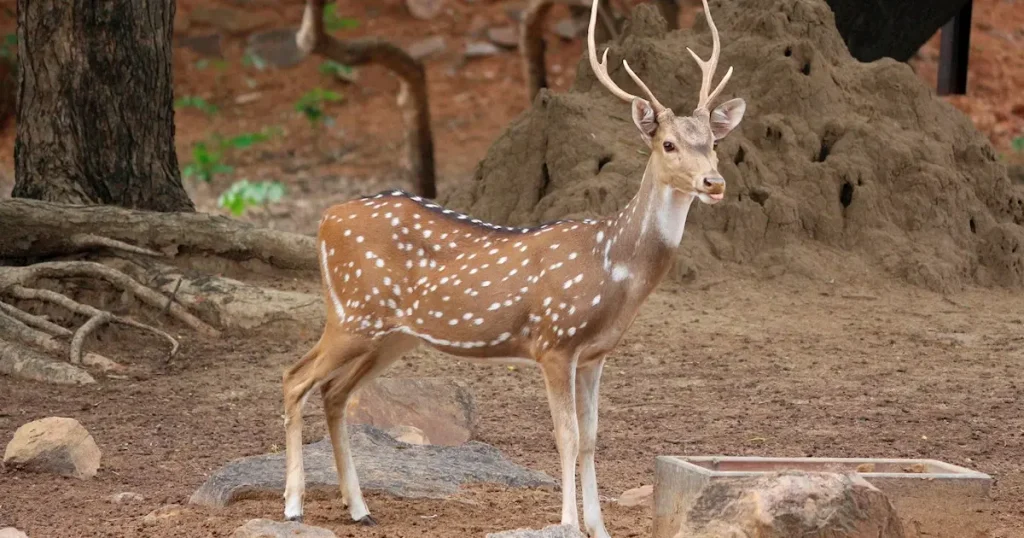
They usually move in large herds to stay protected from big cats and other dangerous predators. Their gentle nature and striking aesthetic make them a standout among wild spotted animals.
These deer communicate through high-pitched alarm barks when sensing danger in dense vegetation. Their white spots reflect sunlight, helping break up their silhouette in grassy woodland habitats.
Dalmatian
- Scientific name: Canis lupus familiaris
- Class: Mammalia
- Diet: Omnivore
Dalmatians are legendary domestic animals that have spots, famous for their sleek white coats covered in black or liver-colored markings. Born completely white, these iconic canine companions develop their unique spotted patterns as they mature.

Historically used as carriage dogs, they possess high energy levels, boundless stamina, and strong protective instincts. Today, they remain beloved family pets recognized globally for their distinctive look.
Their distinct spots vary in size and distribution, giving every single Dalmatian a unique coat pattern. Among domestic pets, they remain the most iconic dog breed with spots.
Hyena
- Scientific name: Crocuta crocuta
- Class: Mammalia
- Diet: Carnivore
Spotted hyenas are formidable carnivores native to sub-Saharan Africa, easily listed among wild animals that have spots across their fur. Their spots fade slightly as they age, but remain visible across their powerful shoulders and hindquarters.
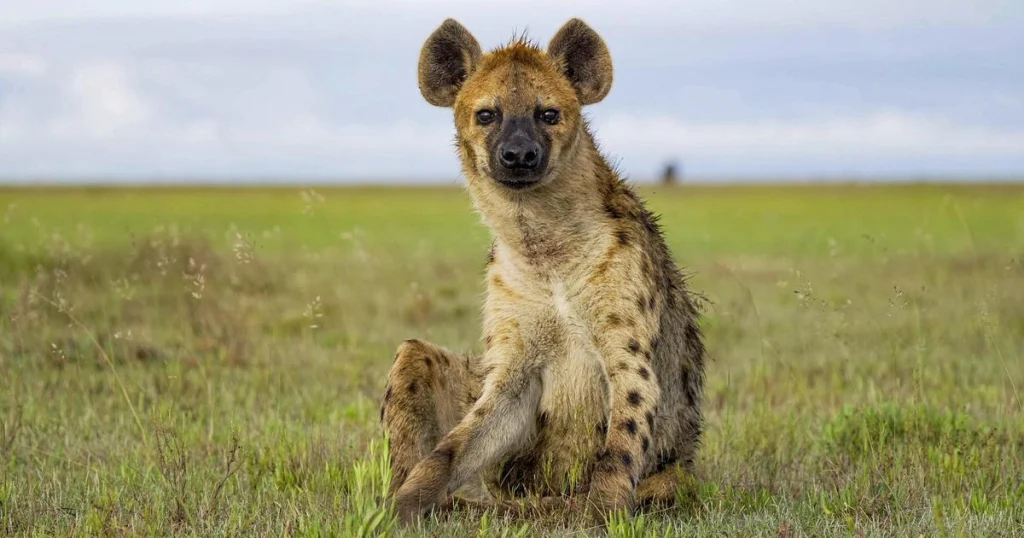
Living in complex social structures called clans, these skilled hunters communicate using a complex array of vocalizations. Their formidable jaw strength allows them to crush thick bones with complete ease.
As apex scavengers and hunters, they play a crucial role in maintaining African grassland ecosystems. Their coarse spotted coats blend effortlessly into dusty savannah terrain during nighttime hunts.
Cheetah
- Scientific name: Acinonyx jubatus
- Class: Mammalia
- Diet: Carnivore
Cheetahs are high-speed predators and classic examples of wild animals that have spots scattered densely over tawny coats. These spots break up their body outline against tall savannah grasses, allowing them to stalk prey effectively.
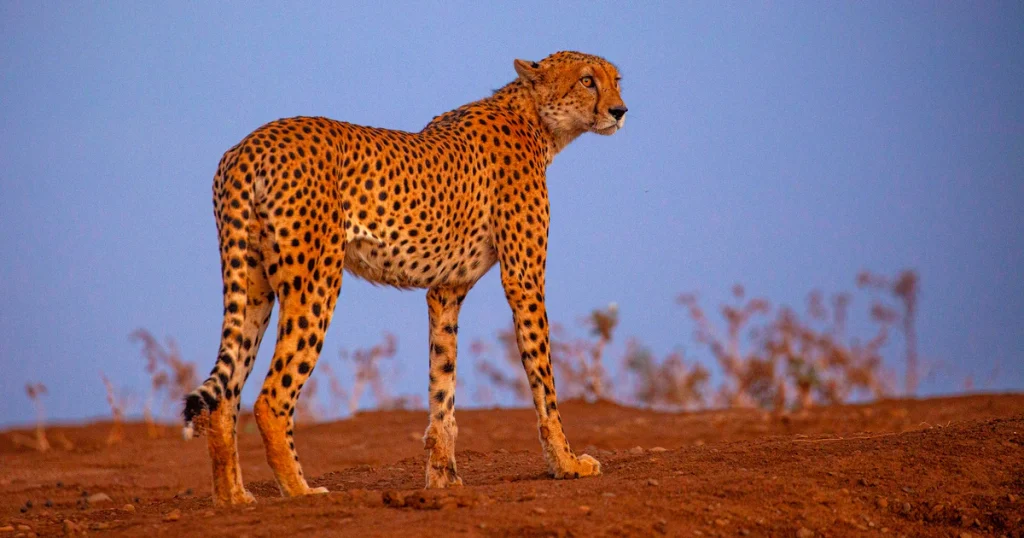
As the fastest land animals on Earth, their sleek bodies are perfectly engineered for high-speed chases. Many predators in the wild, including wild cats, are known as animals that eat rabbits and other small mammals to survive.
Their non-retractable claws provide superior traction when sprinting across open grasslands at full speed. Their aerodynamic frame and flexible spine complement their spotted fur during intense hunting bursts.
Whale Shark
- Scientific name: Rhincodon typus
- Class: Chondrichthyes
- Diet: Carnivore / Filter Feeder
Whale sharks are the largest marine animals that have spots, displaying stunning patterns of white dots against dark grey skin. Each individual possesses a unique spot pattern that researchers use to identify and track them.
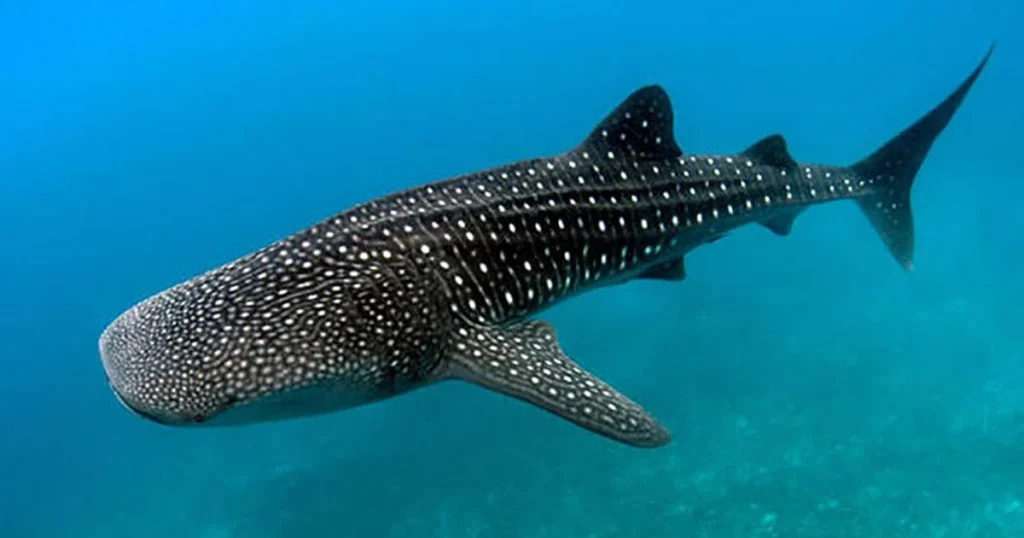
Despite their massive size, these gentle giants are filter feeders that consume tiny plankton and fish larvae. They glide slowly through warm tropical oceans, captivating divers with their breathtaking polka-dot appearance.
Their thick skin provides natural protection as they travel thousands of miles across oceanic basins. Researchers rely on marine animals with spots like the whale shark to monitor ocean migration patterns.
Jaguar
- Scientific name: Panthera onca
- Class: Mammalia
- Diet: Carnivore
Jaguars are powerful big cats and impressive animals that have spots shaped like complex rosettes with dark center dots. These intricate markings provide supreme camouflage while navigating dense rainforests and murky riverbanks.
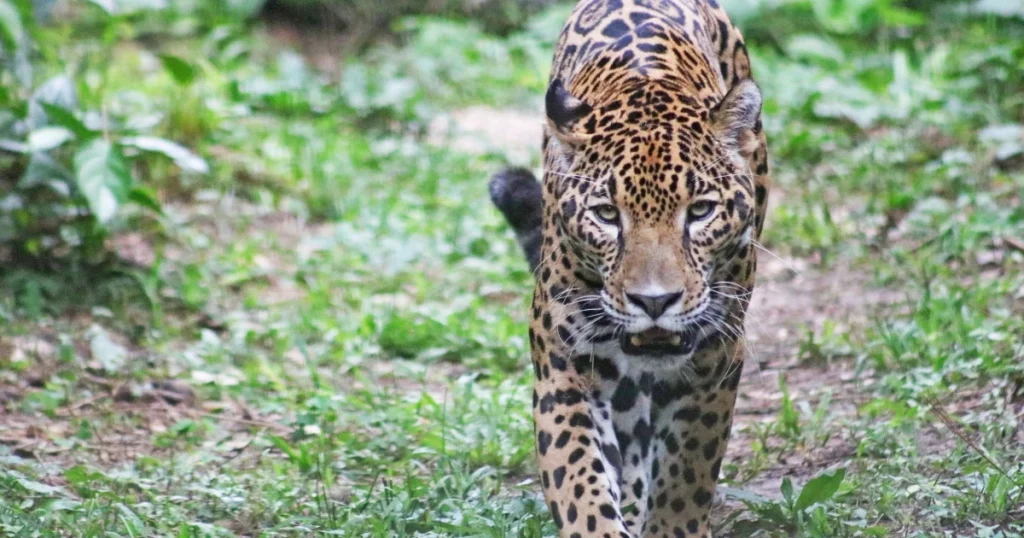
Unlike many other feline species, jaguars are exceptional swimmers that frequently hunt in rivers. Their immense biting power allows them to pierce the tough shells of turtles and armored prey.
These solitary apex predators stalk quietly through thick jungle foliage to ambush ground-dwelling animals. Their distinctive rosettes prove how predatory animals with spots use camouflage to hunt efficiently.
Spotted Salamander
- Scientific name: Ambystoma maculatum
- Class: Amphibia
- Diet: Carnivore
Spotted salamanders are unique amphibians among animals that have spots, displaying bright yellow or orange dots along dark backs. Their dark, moist skin contrasts vividly with these spots, serving as a subtle warning to potential threats.
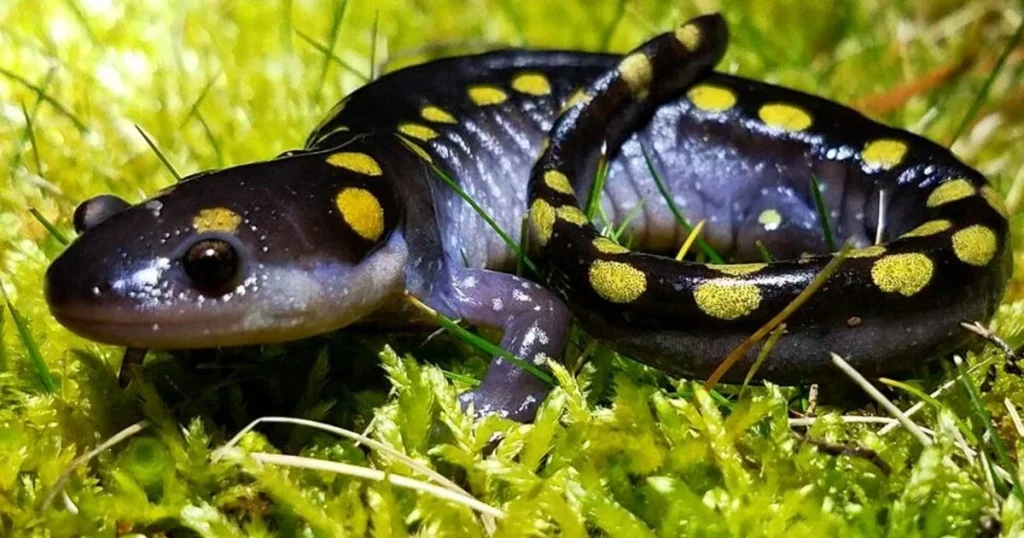
They spend most of their lives hidden beneath rotting logs, damp leaves, or subterranean burrows. During early spring rains, they emerge in large numbers to migrate toward woodland breeding pools.
Glandular secretions across their backs make them unpalatable to birds and small woodland mammals. These colorful amphibians with spots rely on high humidity levels to keep their delicate skin healthy.
Giraffe
- Scientific name: Giraffa camelopardalis
- Class: Mammalia
- Diet: Herbivore
Giraffes are towering land mammals and famous animals that have spots arranged in large, irregular block patterns. These bold patterns help dissipate heat across their bodies while blending into tall acacia woodlands.
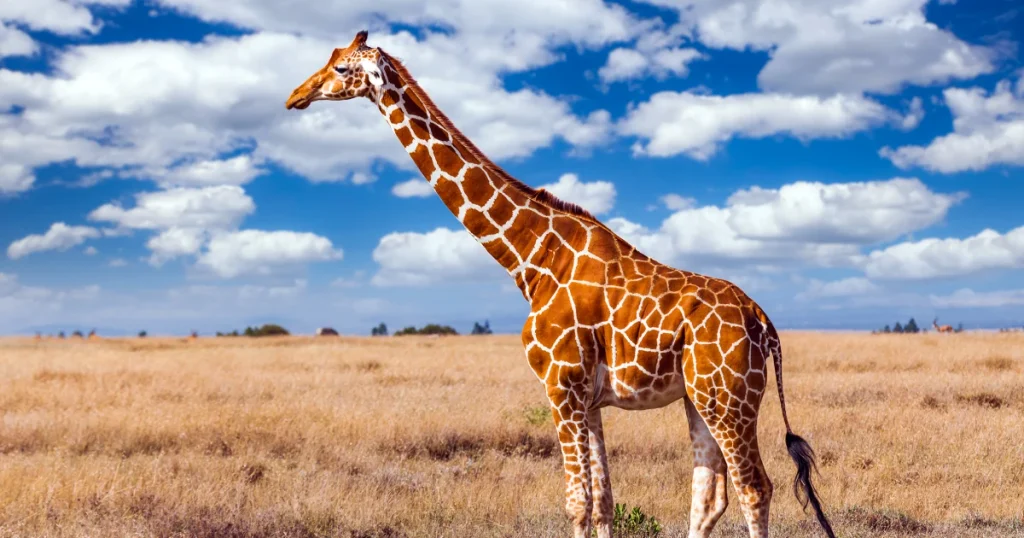
Because of their immense height and heavy bone structure, they are among the few mammals that cant jump off the ground. Their unique spotted coats provide vital camouflage for young calves hiding from predators.
An intricate vascular system beneath each spot helps regulate body temperature under intense desert heat. As the tallest animals with spots, their long necks allow them to reach nutrient-rich treetops easily.
Spotted Turtle
- Scientific name: Clemmys guttata
- Class: Reptilia
- Diet: Omnivore
Spotted turtles are small aquatic reptiles and fascinating animals that have spots scattered across dark shells and necks. As the turtle ages, the number of bright yellow spots often increases across its shell and skin.
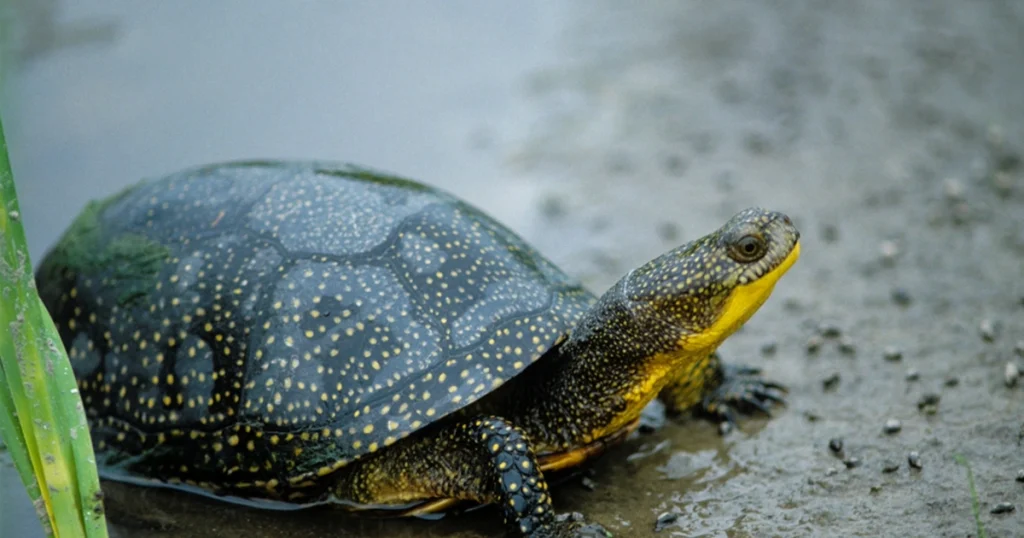
They inhabit shallow wetlands, bogs, and woodland streams where they search for small invertebrates and plants. Due to habitat loss and collection for the pet trade, their populations require careful conservation.
Their small size and dark coloration make them vulnerable to larger wetland predators like raccoons. Their yellow markings make them one of the most recognizable reptile species with spots.
Ocelot
- Scientific name: Leopardus pardalis
- Class: Mammalia
- Diet: Carnivore
Ocelots are medium-sized wild cats and gorgeous examples of animals that have spots arranged in chain-like rosettes. Their velvety coats feature a golden-yellow base that provides camouflage in dense brush and tropical forests.
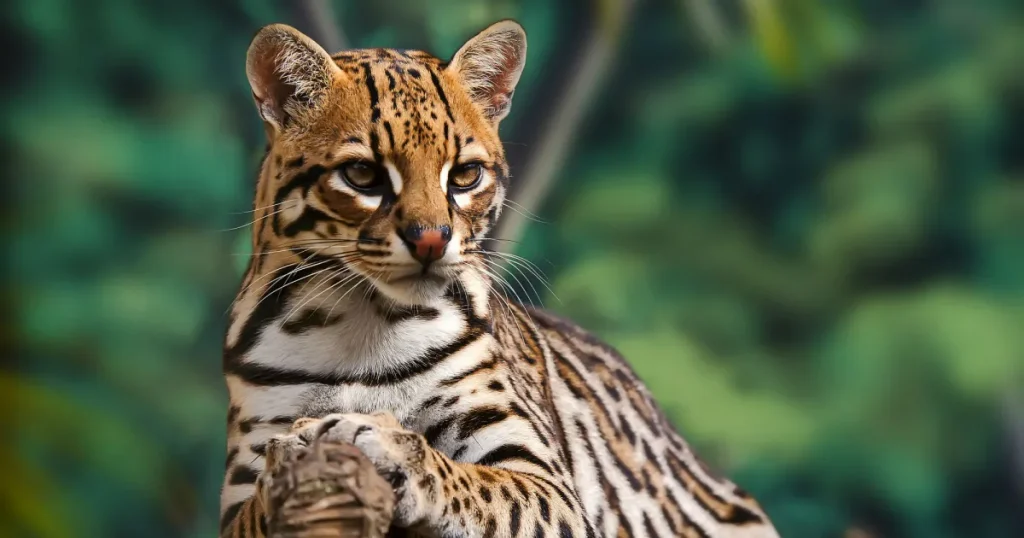
Primarily nocturnal creatures, they use their keen eyesight and sharp hearing to hunt small mammals and birds. Their striking fur unfortunately made them prime targets for illegal hunting in the past.
These agile hunters navigate tree branches easily while tracking arboreal mammals and nesting birds. Among wild cats, they stand out as small predatory animals with spots and stripes.
Burmese Python
- Scientific name: Python bivittatus
- Class: Reptilia
- Diet: Carnivore
Burmese pythons are massive reptiles listed among animals that have spots, featuring blotchy brown markings outlined in dark borders. These irregular markings break up their massive outlines in swamps and dense tropical jungle undergrowth.
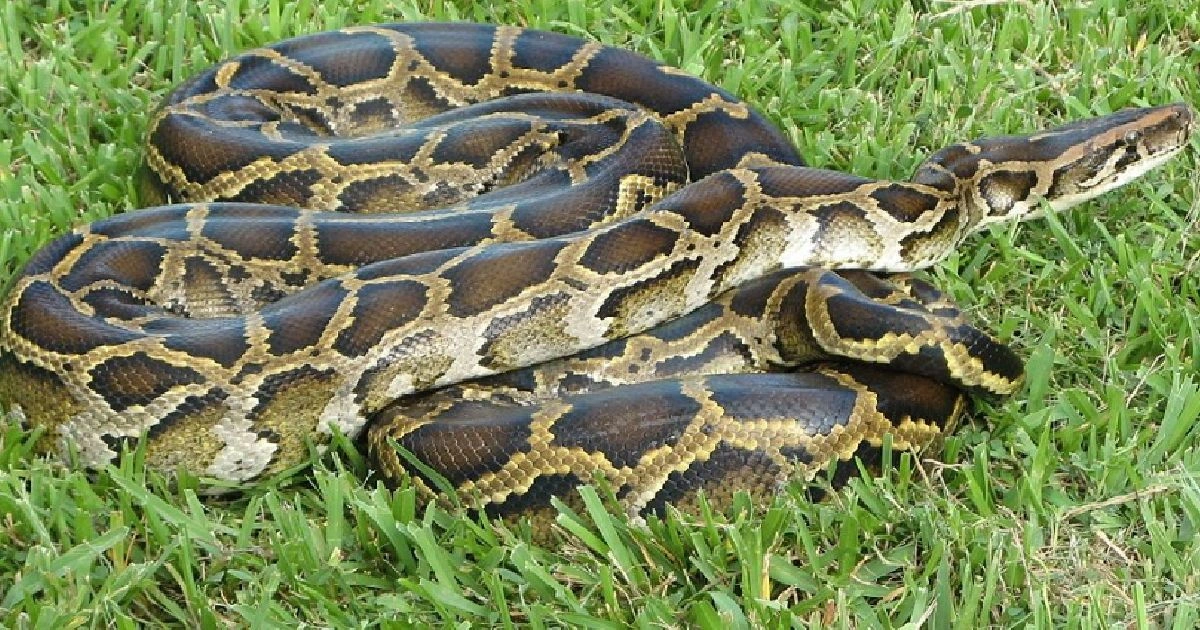
As apex constrictors, they capture prey by coiling their muscular bodies firmly around their target. They can grow to impressive lengths, making them one of the largest snake species on Earth.
Their heat-sensing pits allow them to track warm-blooded animals accurately in total dark environments. Their mottled brownish spots make them one of the most camouflaged snakes with spots in nature.
Fallow Deer
- Scientific name: Dama dama
- Class: Mammalia
- Diet: Herbivore
Fallow deer are medium-sized herbivores and notable animals that have spots along their reddish-brown summer coats. Unlike many deer species, their prominent spots remain clearly visible throughout their adult summer phases.
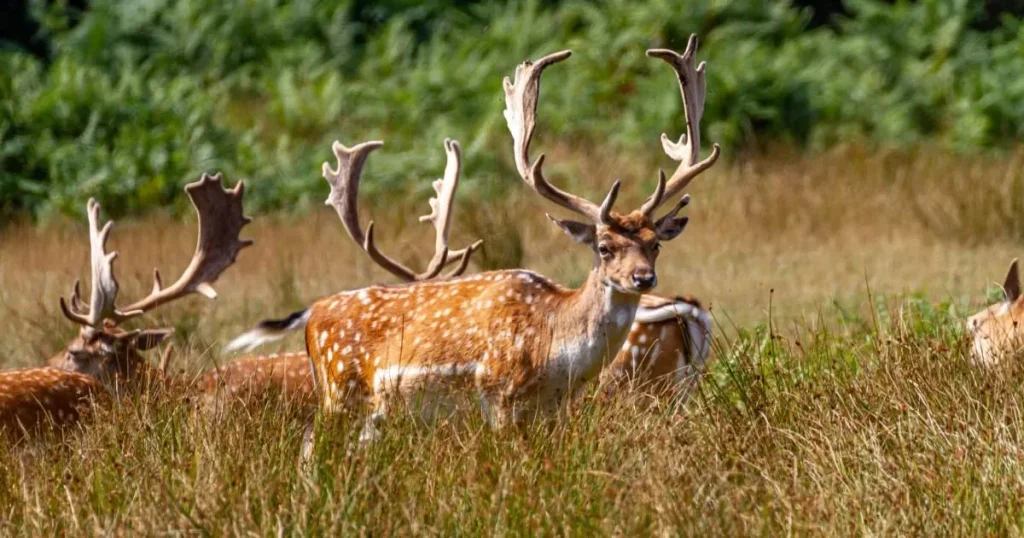
They are widely recognized by the palmated antlers found on males, which resemble those of a moose. Native to Eurasia, they have been successfully introduced to parks and reserves worldwide.
Their coats transition to a darker gray-brown during winter, making their spots less pronounced. They rank among the most widely recognized hoofed animals with spots in temperate regions.
Spotted Moray
- Scientific name: Gymnothorax moringa
- Class: Actinopterygii
- Diet: Carnivore
The spotted moray eel is a striking marine creature counted among underwater animals that have spots covering their skin. These marine predators conceal themselves inside narrow coral reef crevices to ambush unsuspecting prey.
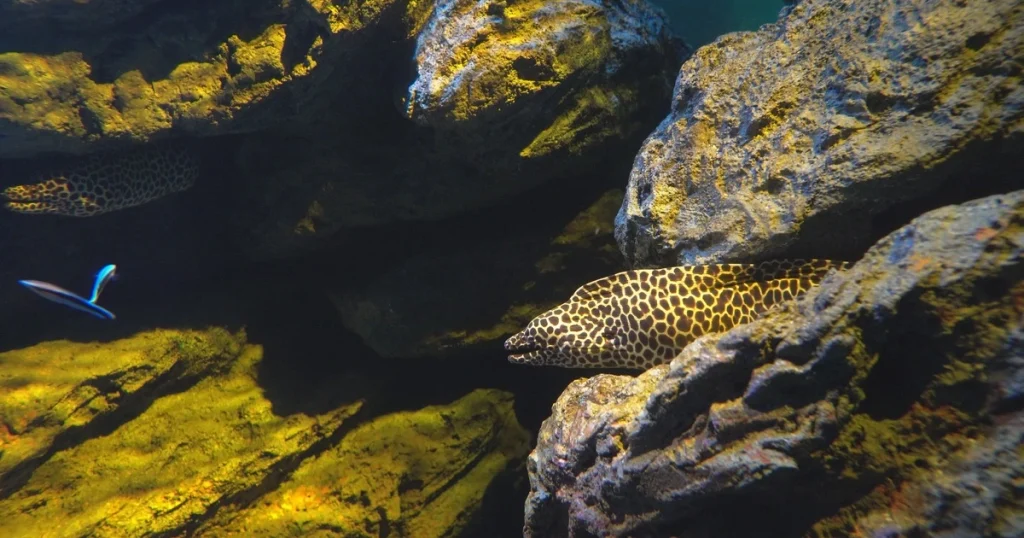
They possess sharp teeth and a secondary set of pharyngeal jaws to pull food deep into their throats. Their mottled spotted skin blends flawlessly into complex underwater rock structures.
They rely on a highly developed sense of smell to locate crustaceans and small reef fish at night. They represent some of the most dangerous predatory fish with spots on coral reefs.
African Wild Dog
- Scientific name: Lycaon pictus
- Class: Mammalia
- Diet: Carnivore
African wild dogs are famous social carnivores and colorful animals that have spots in patches of black, brown, and white. No two individuals share the exact same pattern, making their spotted coats completely unique to each dog.
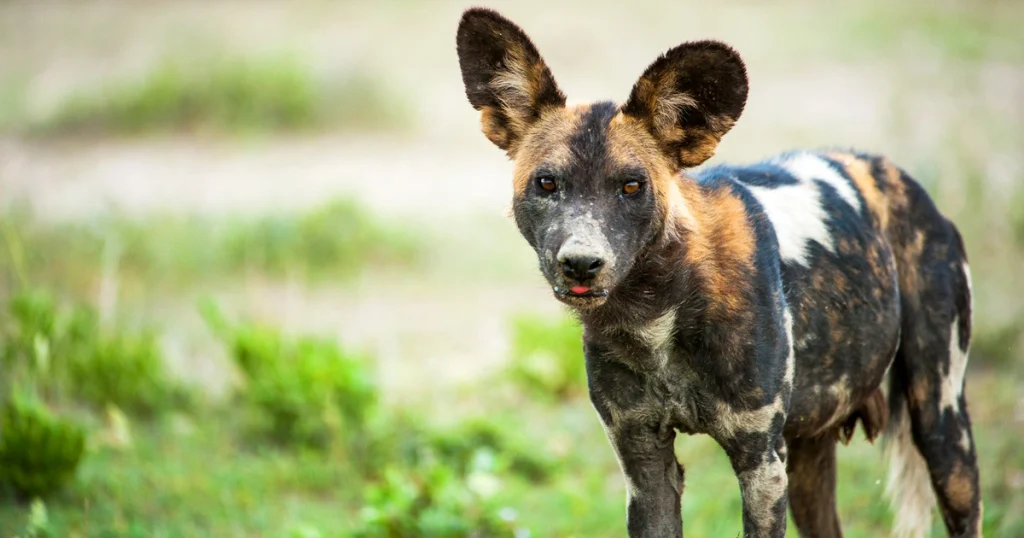
They are highly social animals that live and hunt in organized packs with exceptional success rates. Their colorful coats help group members maintain visual contact while moving through dense vegetation.
Their large rounded ears help dissipate heat while enhancing acoustic awareness across vast savannahs. These wild canines prove how social animals with spots use patterns for group communication.
Appaloosa Horse
- Scientific name: Equus caballus
- Class: Mammalia
- Diet: Herbivore
Appaloosa horses are a world-famous equine breed and prized animals that have spots across their coats. Their markings range from leopard-like spots covering the entire body to localized spots over their hips.
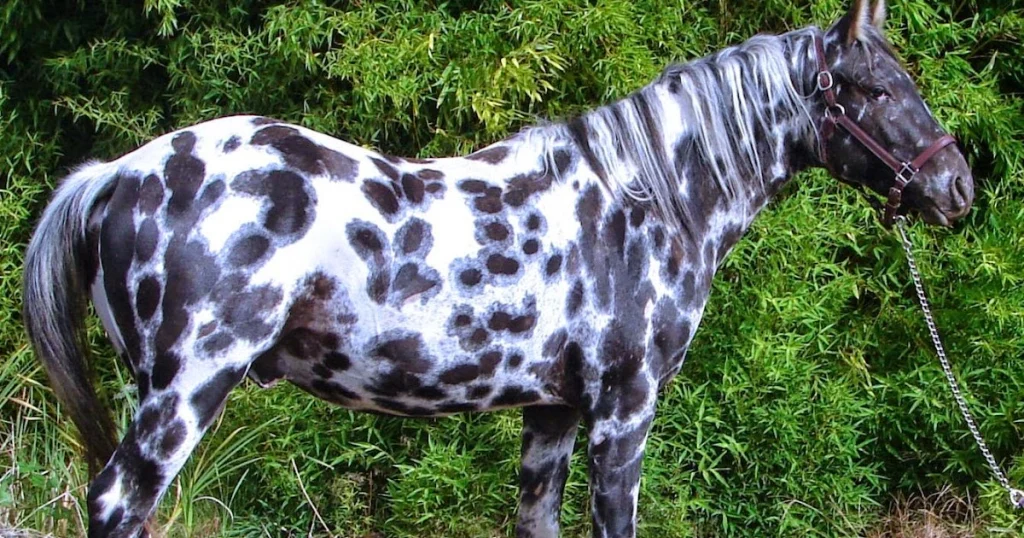
Originally bred by the Nez Perce tribe, these horses are prized for their versatility and gentle disposition. Their mottled skin, striped hooves, and visible white sclera make them instantly recognizable.
Their distinct coat genetics produce varied patterns including blankets, leopard spots, and mottled speckles. They remain the premier domesticated horse breed among animals with spots.
Holstein Friesian Cow
- Scientific name: Bos taurus
- Class: Mammalia
- Diet: Herbivore
Holstein Friesian cattle are globally famous livestock and domestic animals that have spots in large black and white patches. Because farm livestock spend continuous time outdoors in muddy pastures, people often wonder about the dirtiest animals in the world and their habits.
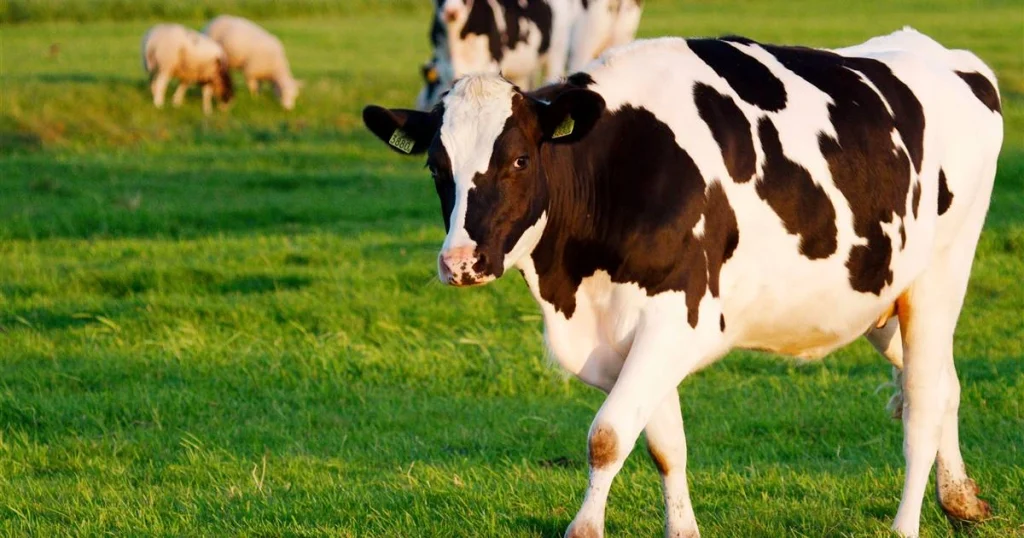
Originating in Europe, these cows are world-renowned for producing exceptional quantities of milk. Their classic spotted look has become an iconic symbol of traditional dairy farming everywhere.
Their unique black patches develop in utero and remain unchanged throughout their entire adult lives. They are undoubtedly the most common farm animals with spots found worldwide.
Spotted Eagle Ray
- Scientific name: Aetobatus narinari
- Class: Chondrichthyes
- Diet: Carnivore
Spotted eagle rays are graceful marine species listed among sea animals that have spots across their backs. Their dark bodies covered in white dots create counter-shading that blends with deep waters when viewed from above.
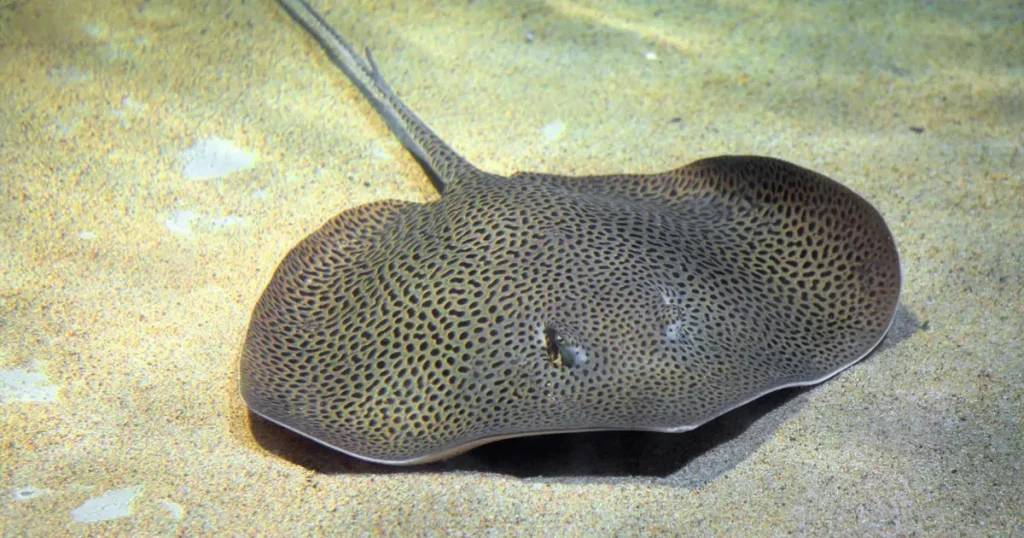
They possess long, whip-like tails armed with venomous spines for defense against marine predators. These graceful swimmers are frequently seen leaping entirely out of the water in tropical coastal regions.
Their flattened duck-like snouts are specialized for digging up mollusks buried in sandy ocean floors. They are widely considered some of the most beautiful ocean animals with spots.
Snow Leopard
- Scientific name: Panthera uncia
- Class: Mammalia
- Diet: Carnivore
Snow leopards are elusive mountain cats and supreme examples of wild animals that have spots for winter camouflage. Their dense gray fur, covered with rosettes and solid dots, blends seamlessly into snowy Central Asian peaks.
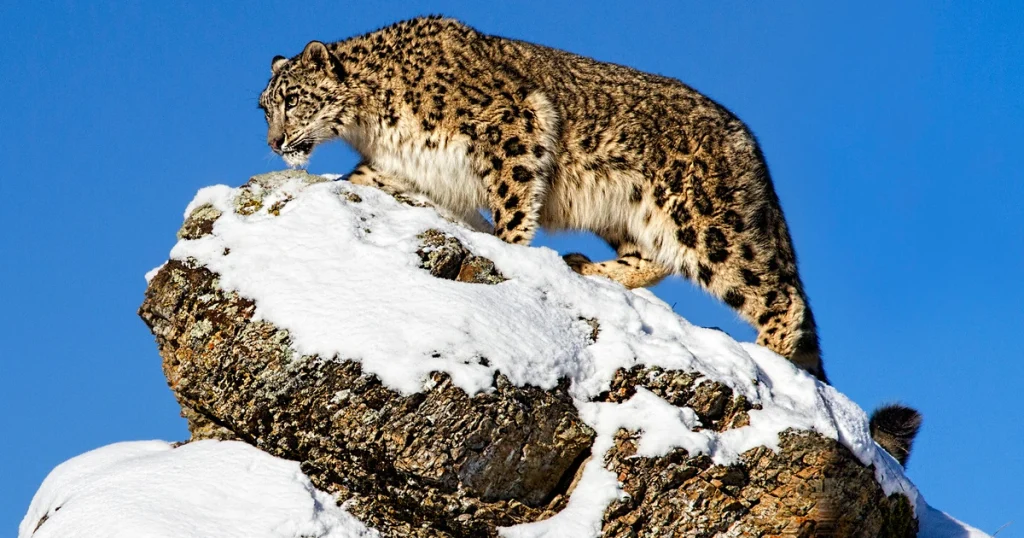
Their extra-long tails help them balance on precarious cliffs while wrapping around their bodies for warmth. While snow leopards rely on long tails for balance, there are several distinct animals without tails adapted to different habitats.
Wide padded paws act like natural snowshoes, spreading weight evenly over soft Himalayan snowdrifts. These high-altitude cats are celebrated as the ultimate mountain animals with spots.
Serval
- Scientific name: Leptailurus serval
- Class: Mammalia
- Diet: Carnivore
Servals are slender African wild cats and remarkable animals that have spots over tawny golden fur. Their bold black spots often merge into distinct stripes along their spine, giving them a striking look.
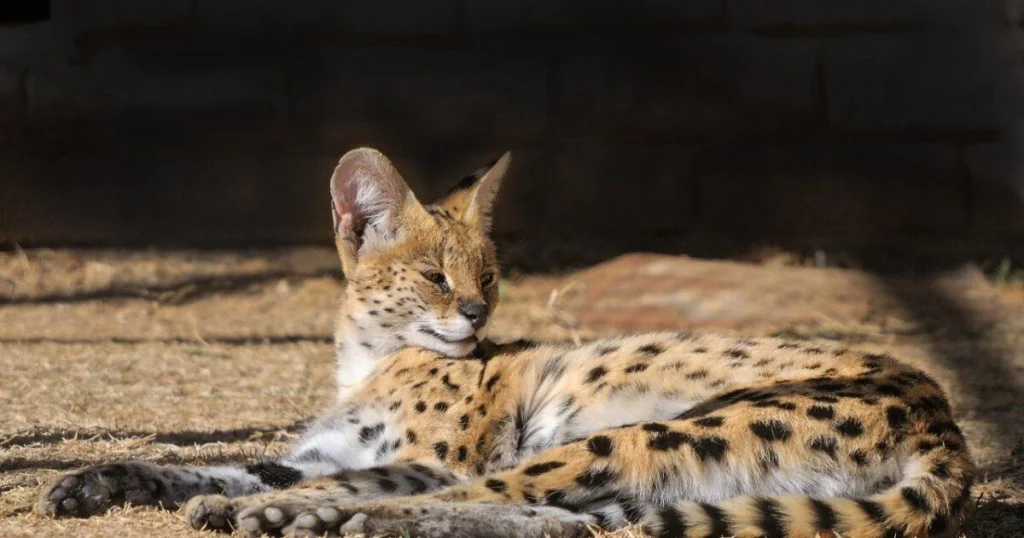
They possess the longest legs and largest ears relative to body size of any cat species. This unique anatomy allows them to leap high into the air to catch birds and rodents in grasslands.
Their tall ears detect underground movement from rodents navigating dense tall grass beds. Their spotted fur makes them effective hunters among savannah animals with spots.
Leopard Seal
- Scientific name: Hydrurga leptonyx
- Class: Mammalia
- Diet: Carnivore
Leopard seals are formidable polar predators among marine animals that have spots scattered across silvery bellies. Their spotted coats help break up their silhouettes in icy Antarctic waters while hunting penguins and fish.
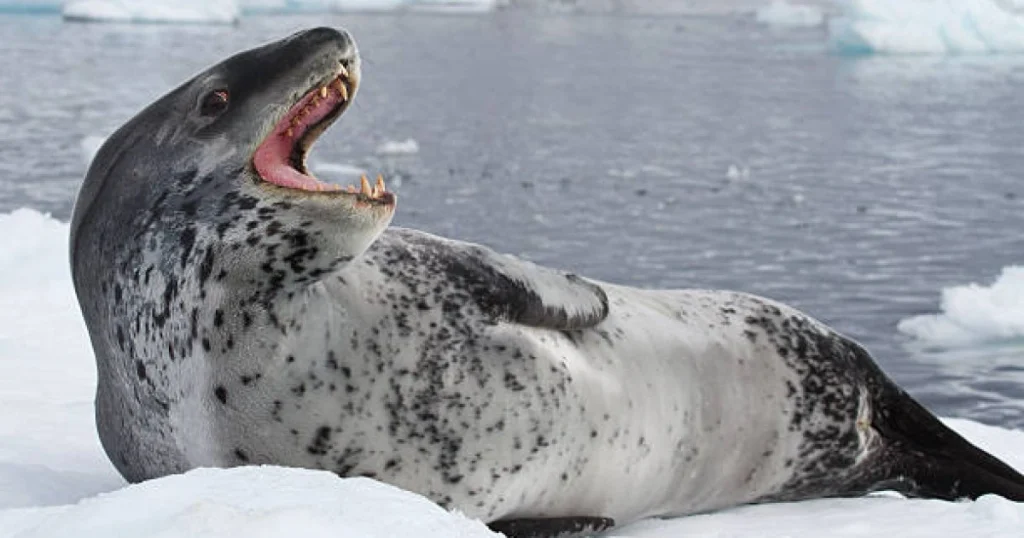
They feature elongated bodies and powerful jaws equipped with long, sharp canine teeth for grasping prey. As formidable hunters, they occupy an apex position in the cold polar marine ecosystem.
Their sleek muscular frame allows for powerful aquatic propulsion through frigid polar sea water. They are the premier polar marine mammals with spots in the Southern Ocean.
Spotted Cuscus
- Scientific name: Spilocuscus maculatus
- Class: Mammalia
- Diet: Omnivore
The spotted cuscus is an arboreal marsupial native to rainforests, ranking among unique animals that have spots on white fur. Males typically exhibit prominent brown or black spots, whereas females usually remain solid gray.
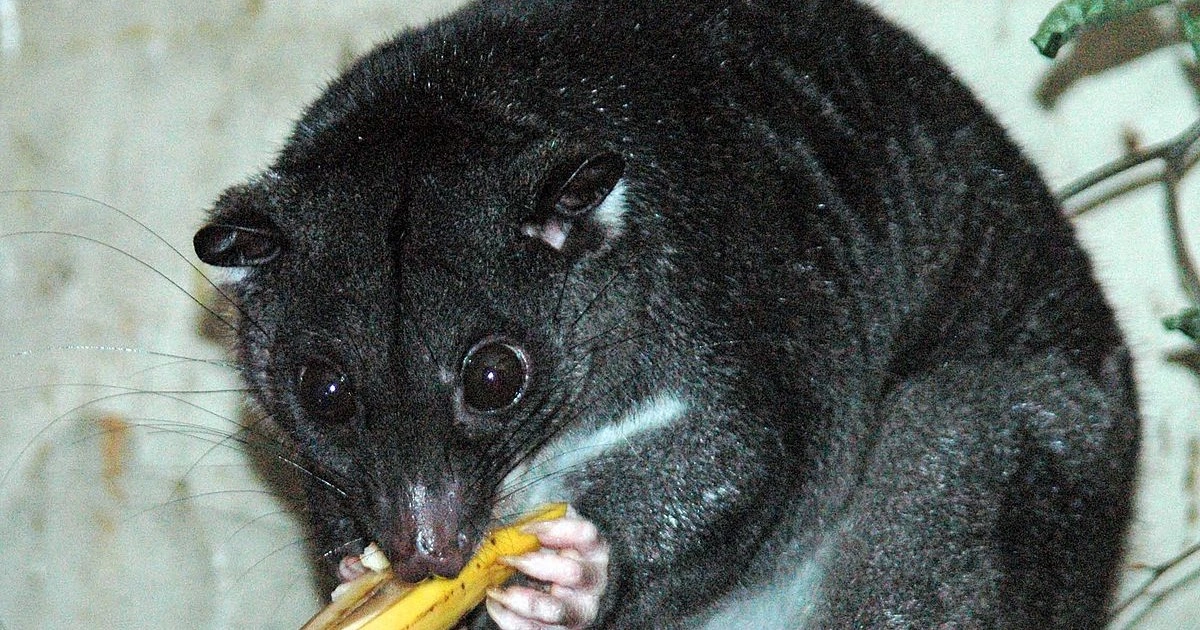
They possess prehensile tails and strong gripping hands that help them navigate high rainforest canopies. Living mostly nocturnal lives, they move slowly through trees while feeding on leaves and fruits.
Their thick woolly coats help regulate moisture levels in warm humid tropical forest environments. They are among the few tree-dwelling marsupial animals with spots in Australasia.
Leopard Gecko
- Scientific name: Eublepharis macularius
- Class: Reptilia
- Diet: Carnivore / Insectivore
Leopard geckos are popular lizard pets and widely recognized reptile animals that have spots over yellow skin. Juveniles start life with bold stripes, which gradually break down into spots as they reach adulthood.
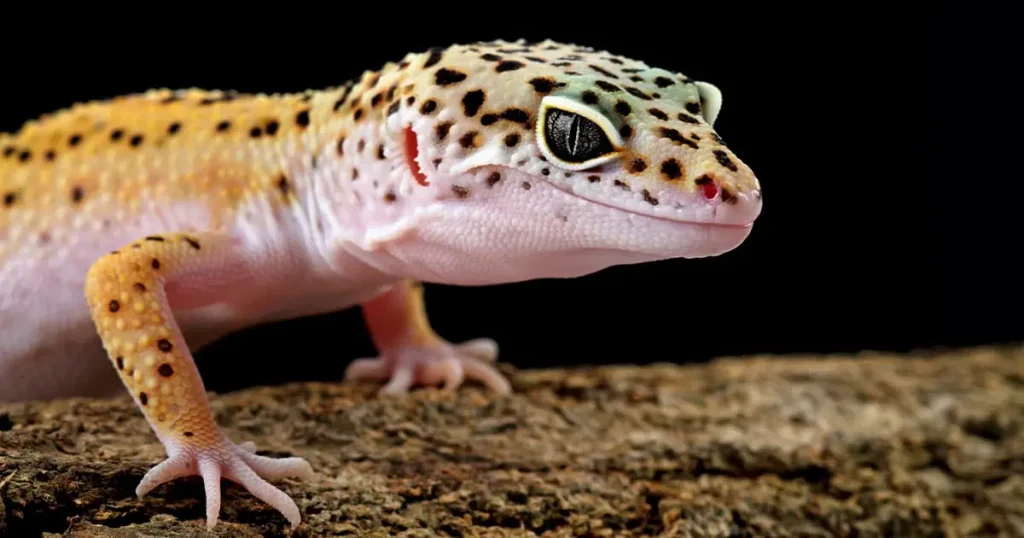
Unlike many other geckos, they possess movable eyelids and lack adhesive toe pads for climbing vertical glass. Their thick tails store essential fat reserves, helping them survive periods of scarce food.
Their dark spots help break up their silhouette against rocky terrain in arid Asian deserts. They remain one of the most popular reptile pets among animals with spots.
Spotted Skunk
- Scientific name: Spilogale putorius
- Class: Mammalia
- Diet: Omnivore
Spotted skunks are small nocturnal mammals listed among wild animals that have spots arranged in broken stripe patterns. These distinct warning patterns serve as an immediate deterrent to potential predators in the wild.
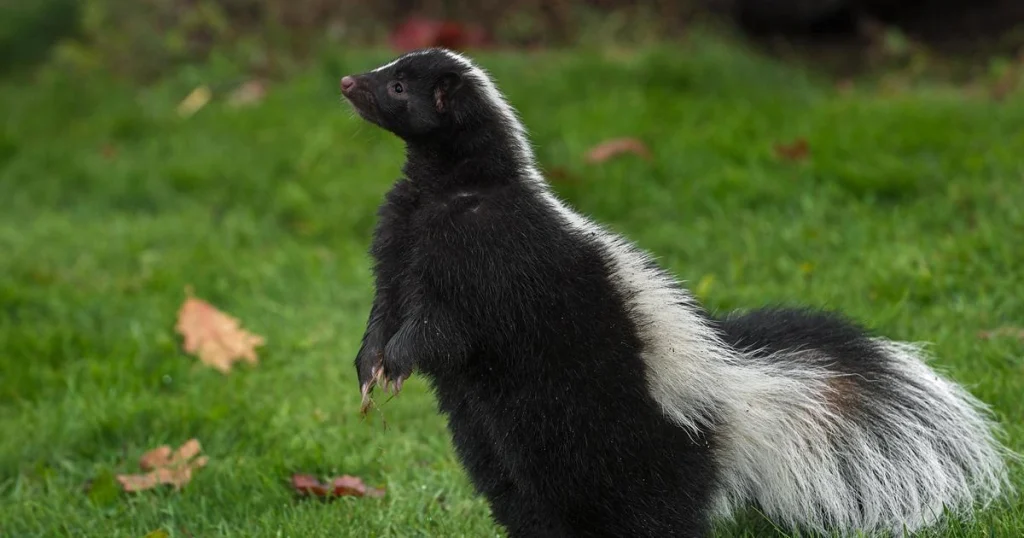
When threatened, they perform a dramatic handstand posture before spraying a powerful, foul-smelling chemical. They are smaller and far more agile than their more common striped skunk relatives.
Their flexible bodies enable them to climb trees effortlessly in search of birds, eggs, and fruit. Their eye-catching coats prove how defensive animals with spots use warning patterns effectively.
Spotted Genet
- Scientific name: Genetta genetta
- Class: Mammalia
- Diet: Omnivore
Spotted genets are small, slender carnivores and agile animals that have spots densely covering their pale fur. A dark stripe runs along their spine, complemented by a long, ringed tail for balance.
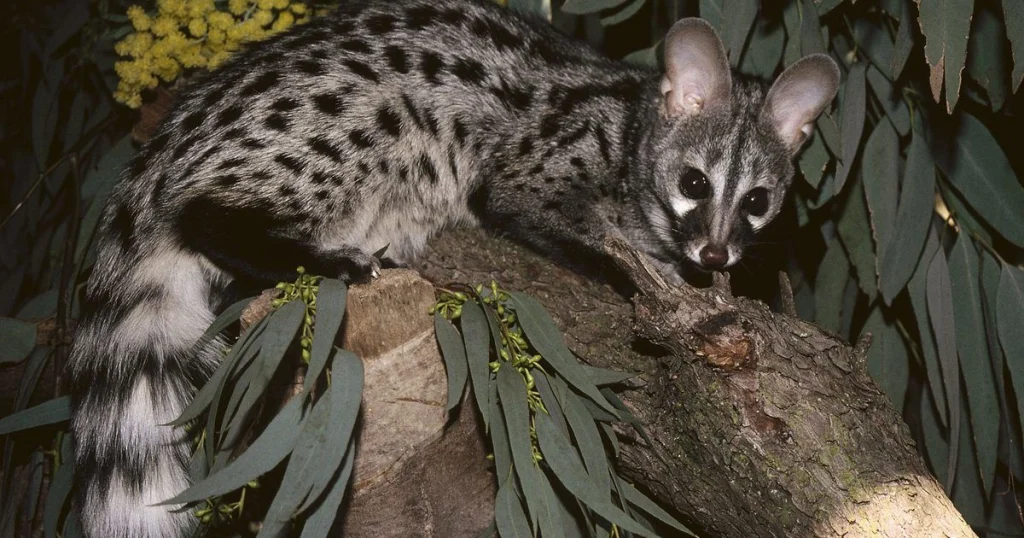
They are exceptional climbers that spend considerable time hunting in trees for small rodents and insects. Their retractable claws and flexible bodies allow them to navigate tight branches effortlessly.
Their large dark eyes provide exceptional night vision for stalking nocturnal forest creatures quietly. They round out our list of extraordinary forest animals with spots.
Conclusion
Spotted patterns across the animal kingdom are far more than mere visual decoration for these species. Whether providing camouflage, warning off predators, or enabling species identification, spots play a vital role in survival.
From land mammals like cheetahs to marine species like whale sharks, animals that have spots showcase nature’s incredible diversity. Understanding these creatures helps us appreciate the evolutionary benefit of spotted coat patterns across global ecosystems.
FAQs
Why do Animals Develop Spots on Their Bodies?
Animals develop spots primarily for camouflage, thermoregulation, species recognition, and deterring potential predators. Spots help break up an animal’s physical outline, making it harder for prey or predators to spot them in their natural habitat.
Are all Animal Spots Unique Like Human Fingerprints?
Yes, many species of animals that have spots, such as giraffes, cheetahs, whale sharks, and African wild dogs possess completely unique spot patterns. Researchers regularly use these distinct markings to identify, track, and study individual animals in the wild.
Do Animals Keep the Same Spots Throughout Their Lives?
While many animals retain their spots for life, others experience coat changes as they mature into adults. For instance, leopard gecko stripes turn into spots, while baby tapirs lose their spots entirely as they grow older.